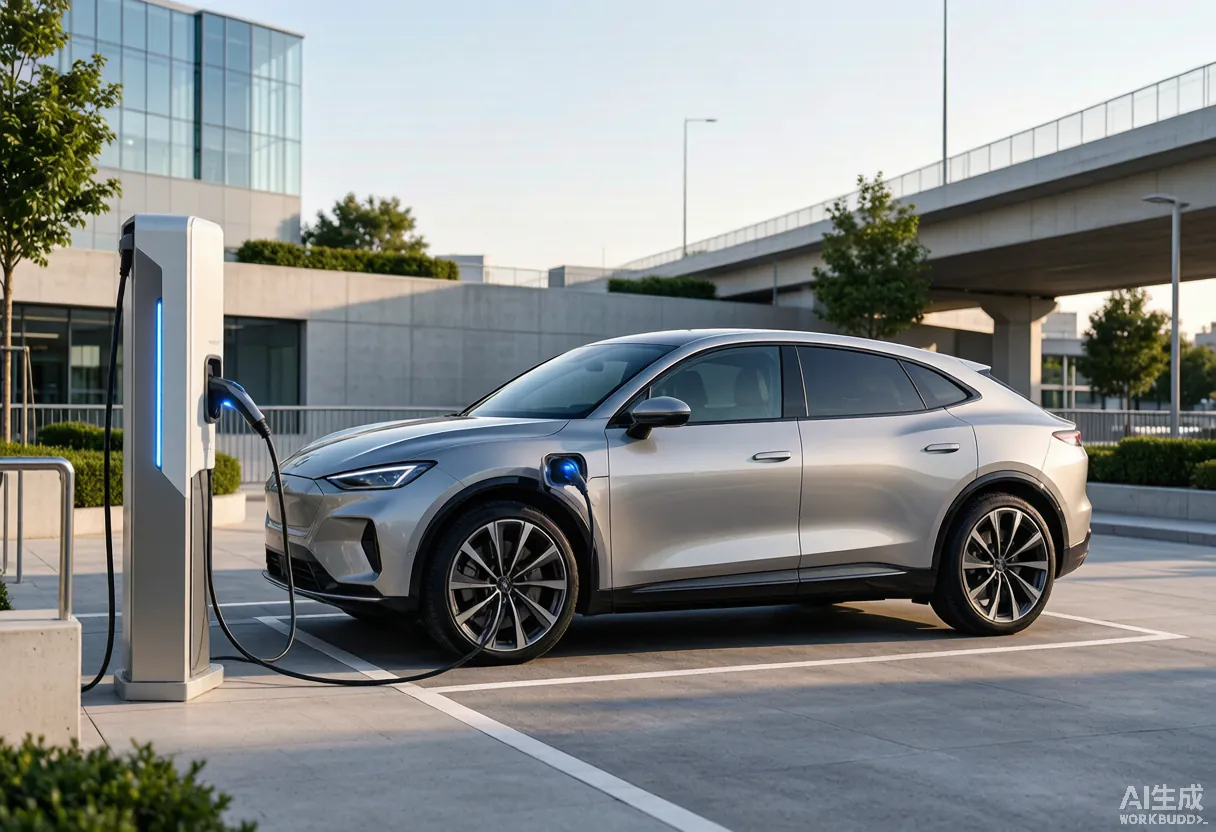
The 800V high-voltage platform is spreading from premium Chinese models down into mainstream price brackets, becoming the defining technology watershed for NEVs in 2026. Looking at peak fast-charging power among production models: the NIO ET9 reaches 600kW (800V/5C), the facelifted Zeekr 001 hits 560kW (900V/12C), the Xpeng G9 around 430kW, and the Li MEGA about 420kW (exceeding 520kW in the low-SOC range) — the leading models have collectively pushed peak fast-charging power past 480kW. "10-minute charging" has become routine, and the charging experience is genuinely approaching that of refueling. This is reshaping consumers' expectations of EVs and making "charges fast" a core purchase decision factor on par with range.
The technology roadmap is still evolving rapidly: brands such as Zeekr and IM (Zhiji) have already moved to 900V architectures, and the Li MEGA uses "10 minutes for 400 km" as its headline claim. At the same time, the 800V platform is penetrating downward — multiple models in mainstream price brackets are now adopting high-voltage architectures, and fast-charging capability that was once a "flagship exclusive" is gradually becoming an "entry-level standard." This will significantly change how overseas buyers value Chinese EVs: mid- and low-priced models now enjoy the same high-voltage fast-charging convenience, further amplifying the cost-performance advantage. An experience once reserved for premium cars is now available in affordable models — a point that matters especially for price-sensitive export markets.
For exports, hardware proliferation is only the first step; landing supporting supercharging networks overseas is equally critical. Chinese brands are deploying supercharging stations in key markets as part of their overseas service ecosystems: in February 2026, Xpeng partnered with Indonesia's Voltron to build Indonesia's first 480kW ultra-fast charging station, with more than 400 chargers connected to the Xpeng app and plans for continued expansion across Southeast Asia. BYD, Zeekr and others are simultaneously building their own charging networks in the Middle East and Europe. "Car plus charger as one package" is becoming the standard playbook for Chinese brands going global — consumers in destination countries can not only buy the car but also use the supporting charging service. Looking ahead, Chinese brands' overseas charging networks will expand from Southeast Asia and the Middle East into more emerging markets over the next two years, gradually forming a service footprint covering major export destinations. Charging services themselves may also become a new profit driver, opening up integrated car-charger-service cooperation opportunities for importers and expanding the value potential of distribution channels.
For overseas buyers, judging whether a Chinese EV is "convenient to charge" means looking not only at whether the car itself supports high-voltage fast charging, but also at whether the brand operates a supporting charging network locally — this directly affects resale values and day-to-day usability, and in turn purchase decisions. Brands with mature dealer networks and complete charging support tend to be more accepted in the end market and find it easier to enter local fleet and rental channels. Conversely, models without supporting infrastructure, however impressive on paper, may see their real-world pain points drag down reputation and repeat purchases.
EZ Auto classifies models for your destination country into "local supercharging network available" and "home charger / third-party charger primarily" categories, so you can plan a charging solution that fits local reality. Contact us on WhatsApp and tell us your target market, and we will provide targeted model-selection advice.
What does solid-state battery mean for Chinese vehicle exports?
Solid-state batteries promise longer range, better safety and lower weight — a key variable for NEV exports. EZ Auto tracks production progress and overseas certification fit in the News section to help buyers time model upgrades.
What to watch with ADAS features for export?
Advanced driver assistance involves local regulation and data compliance. EZ Auto recommends only the assistance levels already approved in the destination and labels feature boundaries, avoiding over-promising.
Are Chinese NEV charging standards usable overseas?
Charging connectors and voltages differ by country (e.g. CCS2 in Europe, GB/T in China). EZ Auto recommends compatible models for your market or suggests in-car adapters.
Does over-the-air (OTA) update work overseas?
OTA depends on local networks and data compliance and is restricted in some markets. EZ Auto states OTA availability at delivery and points to offline maintenance and local service channels so features don't fall short.
Does the battery warranty remain valid after export?
Warranty usually follows the vehicle and the brand's global policy, but overseas service-network coverage varies. EZ Auto explains warranty scope and cross-border limits before closing the deal to avoid mismatched expectations.
This article is published by EZ Auto. EZ Auto (Cheyixing Automobile Import & Export) specializes in exporting Chinese vehicles — new, used and parts — serving Latin America, Central Asia & CIS, Africa, the Middle East and the EU, with order-based sourcing, inspection with photo report, export documentation and ocean freight in one place.
Message us on WhatsApp for the latest prices and delivery to your country.
WhatsApp us