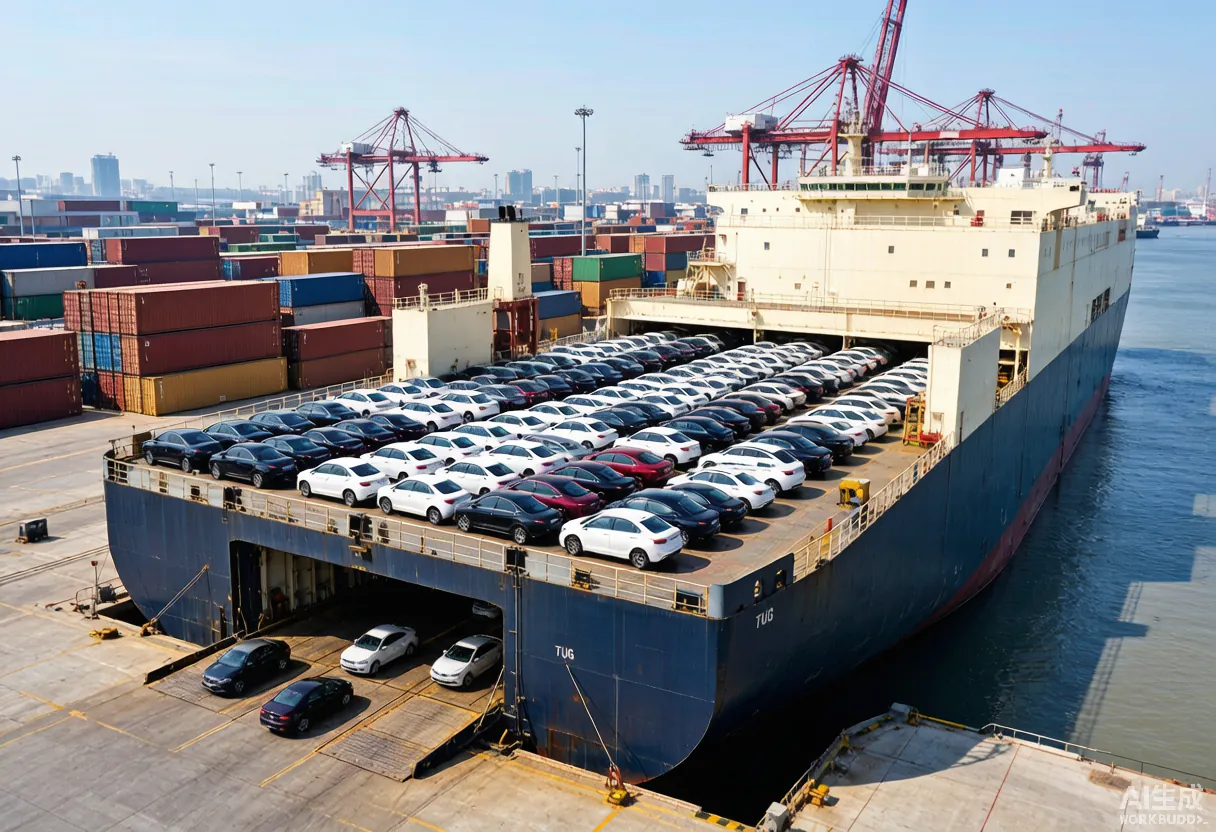
On July 9, the China Association of Automobile Manufacturers (CAAM) released June production and sales data, with the most striking signal coming from exports: June vehicle exports reached 1.037 million units, breaking the single-month million mark for the first time, up 75.1% year on year. Of these, NEV exports hit 523,000 units, up 1.6 times year on year and surpassing gasoline vehicle exports in a single month for the first time. Exports have been upgraded from an "incremental supplement" to the "core engine" of the industry — the globalization of China's auto industry is visibly accelerating, with rising dependence on and influence in overseas markets. Export performance has become the primary indicator for judging the health of China's auto market. Looking at the monthly trend, exports have remained at elevated levels for many consecutive months, and year-to-date growth far outpaces overall production and sales growth. Exports are becoming the strongest driver of industry growth, and this trend will not reverse in the near term.
The overall market shows structural divergence of "soft domestic sales, explosive exports": June production and sales were 2.76 million and 2.81 million units respectively, down 1.2% and 3.2% year on year; meanwhile NEV production and sales reached 1.598 million and 1.643 million units, up 26% and 23.6%, with NEVs accounting for 58.5% of new-vehicle sales. Cumulative first-half exports reached 5.096 million units, up 65.3% year on year, of which NEV exports were 2.355 million units, or 46% of the total. Against a backdrop of slowing domestic demand, automakers have more incentive to direct high-quality capacity overseas, and export pricing and supply priority are tilting toward overseas markets — giving overseas buyers more leverage in price and delivery negotiations.
In the brand rankings (CPCA wholesale basis), the top three in June were BYD (397,000 units), Chery (246,000), and Geely (238,000). On a retail basis, the top three were BYD (224,000), Geely (173,000), and Changan (99,000). Export shares among leading brands continue to climb. The Tiggo, Xingyue (Monjaro), and Song series perform strongly in the CIS market, and the image of Chinese brands overseas is shifting from "good value" toward "reliable plus technology." The room for brand premium is opening up, with some models already retailing higher in destination countries than their domestic equivalents in China. The double lift of brand power and product strength is making export margins more attractive.
For overseas importers, this landscape means two layers of opportunity. First, with Chinese automakers under domestic demand pressure, they are more motivated to direct high-quality capacity and competitive pricing to overseas markets, expanding buyers' room for price negotiation. Second, with NEV penetration past the halfway mark, Chinese brands' technology and cost advantages are being transmitted to export markets faster — the first time NEV exports overtook gasoline vehicles is direct proof. Importers should watch for export-oriented promotions and special policies that leading brands release to clear inventory and grow share, and lock in supply during this window. For smaller importers, building direct relationships with leading brands or their authorized dealers often yields better pricing and delivery terms than the secondary market. It also pays to follow special export editions and regional policies automakers offer for overseas markets — these models tend to offer even better value.
EZ Auto tracks CAAM rankings and export data monthly and combines them with destination-country certification, logistics costs, and local retail prices to screen the most cost-effective export models available today. Contact us on WhatsApp and tell us your target market, and we will provide customized model recommendations and quotes.
Which markets demand the most Chinese vehicles?
Latin America, Central Asia & CIS, the Middle East, Africa and the EU all show steady demand with different preferences (e.g. pickups and SUVs in Central Asia, heat-resistant models in the Middle East). EZ Auto supplies all five regions equally, without betting on a single market.
Where can I check Chinese vehicle export data?
Export volumes, destination registrations and import figures are published by China Customs and destination statistics offices. EZ Auto's News section digests the key trends so buyers can judge quickly.
How do shipping cost swings affect my purchase?
Freight is a meaningful share of landed cost and moves with capacity and fuel. EZ Auto locks the shipping method and timing at contract and quotes major pre-arrival costs to limit mid-way price changes.
How do exchange-rate swings affect export quotes?
RMB and destination-currency fluctuations affect landed cost. EZ Auto stamps a validity period on quotes, and volume orders can lock an exchange-rate window to reduce price-change risk.
Which models hold value better in target markets?
Resale value depends on local parc size, parts availability and brand recognition. EZ Auto advises model choices based on the destination's market rather than simply pushing high-margin units.
This article is published by EZ Auto. EZ Auto (Cheyixing Automobile Import & Export) specializes in exporting Chinese vehicles — new, used and parts — serving Latin America, Central Asia & CIS, Africa, the Middle East and the EU, with order-based sourcing, inspection with photo report, export documentation and ocean freight in one place.
Message us on WhatsApp for the latest prices and delivery to your country.
WhatsApp us