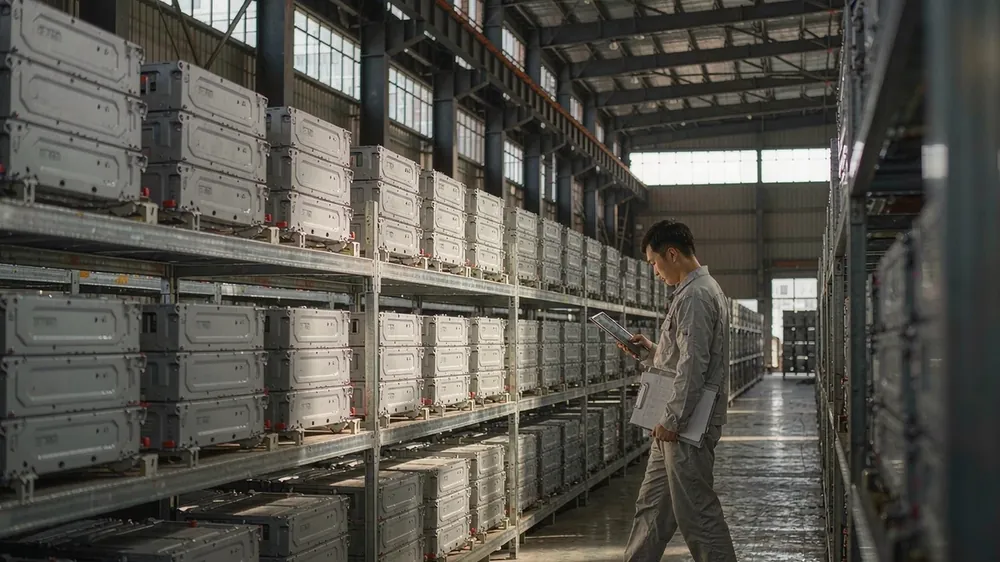
If you only price off the vehicle customs value, you will systematically under-quote and quietly lose margin. For overseas distributors importing Chinese-brand EVs, 1 September 2026 is a line that must go into your cost model: China now charges a 2% consumption tax on lithium-ion batteries, and that rate climbs to 4% in 2027. The practical effect is simple — a single 60 kWh pack now carries a fixed tax burden at the factory gate.
Complete vehicles still use the existing export rebate system, with NEV VAT rebate held at 13%; but battery packs exported as a separate category face a tightening rebate path, and from 2027 battery export rebates disappear entirely.
Against a whole vehicle with an 80,000 USD CIF value, the battery tax alone is 0.3% to 0.6% of landed cost. By contrast, sodium-ion and solid-state batteries are exempt from this tax through the end of 2028, widening the cost gap between chemistries.
If the OEM passes the tax into the FOB price, overseas retail can rise 1% to 2%; for kits shipped as CKD/SKD, the current rules give no specific rebate path, so practice is still uncertain.
Ask your supplier to list the battery consumption tax as a separate line and to state clearly whether the quote is for a complete vehicle or for kits. Before booking, confirm whether the battery type falls in the exempt category. To estimate the landed cost and certification lead time for a specific model in your market, send the VIN and configuration list for a quote.
What certifications are required to import used cars from China?
Requirements vary by destination (e.g. EAEU needs SBKTS/OTTC, GCC for the Middle East). EZ Auto handles compliant documents and certification per the destination customs, confirming clearance before shipment to avoid port hold-ups.
What recent policy changes affect Chinese vehicle exports?
EV subsidies are phasing out while export licensing and shipping capacity fluctuate. EZ Auto tracks destination tariffs and certification changes and updates them in the News section for procurement decisions.
Can an individual buy a car directly from China for export?
Possible, but with document and customs hurdles. Most buyers order through a licensed exporter like EZ Auto, which handles the contract, export declaration and destination paperwork; you only handle pickup and local registration.
What export documents are needed for used cars?
Core documents include the commercial invoice, packing list, export customs declaration, bill of lading and the destination's import clearance papers. EZ Auto prepares the full set before shipment to ensure smooth clearance abroad and avoid demurrage.
Do destination countries limit the age of imported vehicles?
New cars are mostly unrestricted; used cars often face an age cap (e.g. some Middle East and Africa markets require within 5-8 years). EZ Auto checks the destination's age rule before shipping and screens out non-compliant units to avoid rejection at port.
This article is published by EZ Auto. EZ Auto (Cheyixing Automobile Import & Export) specializes in exporting Chinese vehicles — new, used and parts — serving Latin America, Central Asia & CIS, Africa, the Middle East and the EU, with order-based sourcing, inspection with photo report, export documentation and ocean freight in one place.
Message us on WhatsApp for the latest prices and delivery to your country.
WhatsApp us