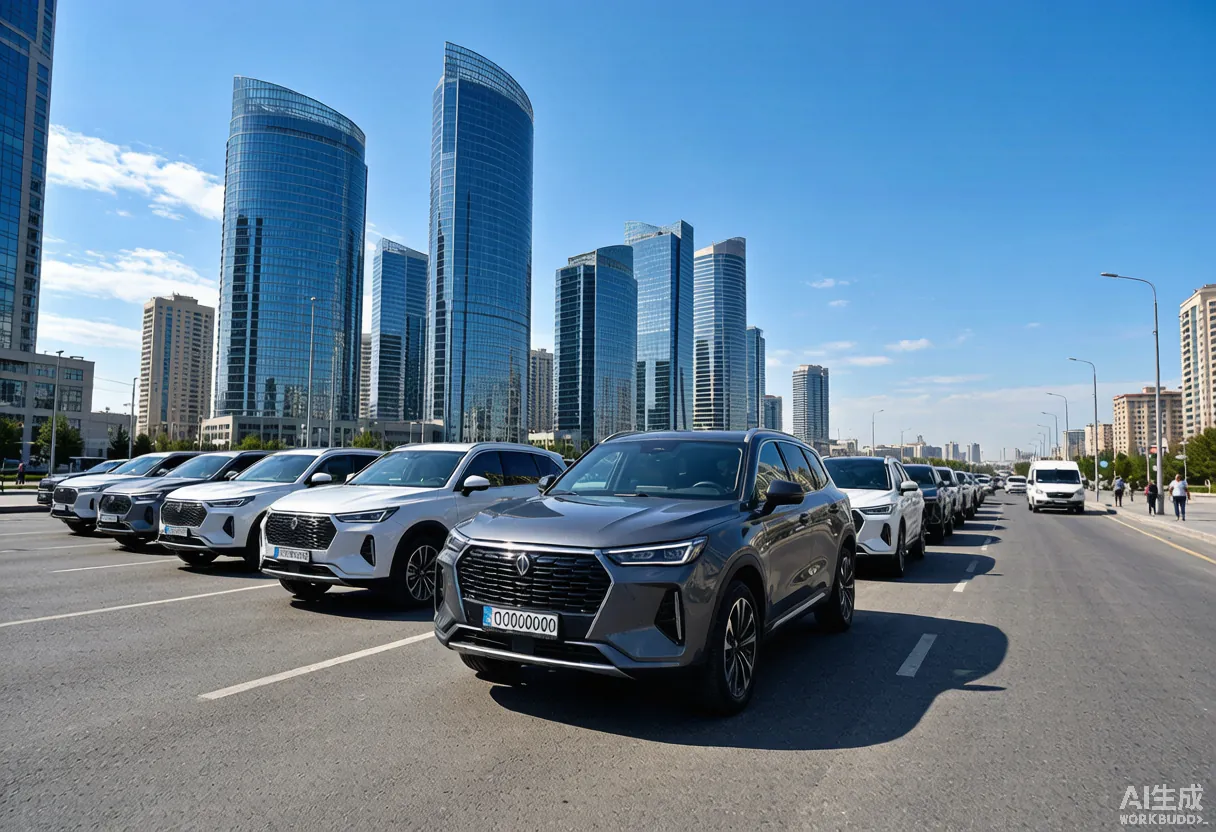
Kazakhstan has adjusted its import vehicle policies intensively since the start of 2026, with certification made mandatory and tax treatment differentiated. As Central Asia's largest transit and end-consumer market, its policy changes directly affect regional clearance costs and lead times and shift the flow of vehicle supply across neighboring CIS markets — a development every exporter targeting Central Asia should watch closely. Located on the Eurasian land bridge, Kazakhstan is both an end-consumer market and a key node for Chinese vehicles entering Russia and the Central Asian hinterland. Its policy direction has bellwether significance: the pace of its compliance drive will very likely be referenced and followed by neighboring Central Asian states, so exporters should plan their Central Asian presence on a longer time horizon rather than focusing only on short-term windows in a single market.
On taxes and fees: from January 1, 2026, imported BEVs are subject to a 16% VAT (the EAEU duty-free period has ended; BEV import duties can still be zero-rated but only for personal use, with resale prohibited), raising combined import costs by an estimated 10%–20%. Gasoline vehicle tariffs remain around 15% (engines under 3.0L, vehicles aged 3–7 years). The signal is clear: encourage compliant personal use and restrict duty-free bulk imports intended for resale. The bar for trade-oriented imports is rising — the old approach of profiting through duty-free channels no longer works, and traders must recalculate their cost structure and factor the VAT into their pricing system.
On certification: from March 13, 2026, vehicles holding only an OTTC copy are banned from circulation — a complete, valid EAC certificate is required. Government Decree No. 351 (effective May 10, running until end-2028) further stipulates that M1 passenger cars less than 3 years old may only be imported by the overseas manufacturer's official representative, must undergo mandatory model certification, and are for domestic sale only with re-export prohibited. From May 8, scrappage (recycling) fee rates on vehicles produced in Russia and Belarus were raised. The overall direction is "official channels plus compliant certification" — the space for non-certified transit trade has been drastically squeezed, and the supply chain is being restructured toward legitimacy. Well-capitalized importers are advised to negotiate official import authorization directly with authorized brand principals to secure compliant supply.
On the market side, demand in Kazakhstan remains strong: 234,900 new vehicles were sold in 2025, up 14.4% year on year, with Chinese brands taking a 39% share; January 2026 sales rose 25.2% year on year, with the Chinese-brand share continuing to climb. The policy tightening has not suppressed terminal demand — if anything it has cleaned up the competitive environment: compliant importers avoid price wars with gray channels, and over the long run both margins and channel stability are better protected. For companies with official authorization and certification capabilities, this is actually an opportunity to gain share. As Central Asian states roll out similar compliance policies one after another, companies that complete certification and channel build-out first will build a lasting moat in regional competition — professional compliance capability is becoming the scarcest resource in the Central Asian market.
EZ Auto continuously tracks policy changes in Kazakhstan and neighboring Central Asian countries. We advise buyers to confirm the latest tariffs, certification, and re-export restrictions for target models before ordering; we can complete the checks and prepare the corresponding documentation before purchase. Contact us on WhatsApp for compliant procurement solutions in the Central Asian market.
What certifications are required to import used cars from China?
Requirements vary by destination (e.g. EAEU needs SBKTS/OTTC, GCC for the Middle East). EZ Auto handles compliant documents and certification per the destination customs, confirming clearance before shipment to avoid port hold-ups.
What recent policy changes affect Chinese vehicle exports?
EV subsidies are phasing out while export licensing and shipping capacity fluctuate. EZ Auto tracks destination tariffs and certification changes and updates them in the News section for procurement decisions.
Can an individual buy a car directly from China for export?
Possible, but with document and customs hurdles. Most buyers order through a licensed exporter like EZ Auto, which handles the contract, export declaration and destination paperwork; you only handle pickup and local registration.
What export documents are needed for used cars?
Core documents include the commercial invoice, packing list, export customs declaration, bill of lading and the destination's import clearance papers. EZ Auto prepares the full set before shipment to ensure smooth clearance abroad and avoid demurrage.
Do destination countries limit the age of imported vehicles?
New cars are mostly unrestricted; used cars often face an age cap (e.g. some Middle East and Africa markets require within 5-8 years). EZ Auto checks the destination's age rule before shipping and screens out non-compliant units to avoid rejection at port.
This article is published by EZ Auto. EZ Auto (Cheyixing Automobile Import & Export) specializes in exporting Chinese vehicles — new, used and parts — serving Latin America, Central Asia & CIS, Africa, the Middle East and the EU, with order-based sourcing, inspection with photo report, export documentation and ocean freight in one place.
Message us on WhatsApp for the latest prices and delivery to your country.
WhatsApp us