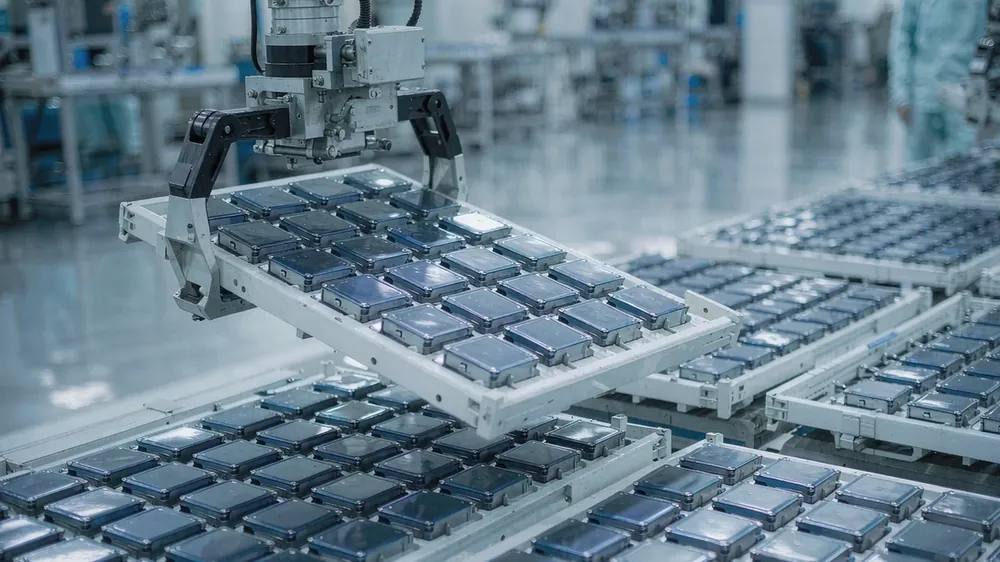
The real signal behind securing a European automaker nomination for automotive-grade sodium-ion batteries is not that they will replace lithium iron phosphate, but that they fill the low-temperature gap in cold-climate markets. Treating them as a second LFP is a misjudgment; the correct approach is to put them into cold-climate scenarios and compare low-temperature degradation. For importers doing business in Russia, Kazakhstan, and the Caucasus, this so-called cheap version of lithium batteries actually implies a new stocking logic: low-temperature range no longer relies on stacking batteries, and used-car residual values gain another reference point. To judge whether a vehicle is worth importing into a cold-climate market, don't just look at room-temperature range first; put real winter performance on the table, then decide how much inventory is safe to stock. This is the item buyers most easily overlook when doing the math.
The background needs to be clear first. Since September 1, 2026, sodium-ion storage batteries have had an independent customs commodity code 8507809010, ending the long history of being declared under "other storage batteries." Camel Group's 12V sodium-ion battery secured a pre-research project nomination from a mainstream European automaker at the end of August, entering the technical validation system of an overseas OEM. HiNa Battery and South Korea's VOLTA signed a 5-year 10GWh supply agreement on September 2, following prior validation by a 15MWh energy storage project. On cost, sodium battery cells are about 0.35–0.40 yuan/Wh, and the price gap with lithium iron phosphate has narrowed to within 0.1 yuan/Wh; moreover, sodium batteries are exempt from consumption tax until the end of 2028, adding another layer of price buffer through the tax window.
A cold-climate calculation makes it clear. What sodium batteries save is not the vehicle price, but the range shrinkage and charging time caused by low-temperature degradation. At minus 20°C, usable range for lithium batteries drops significantly, while sodium batteries shrink far less than lithium, and the charging rhythm is more stable. For heavy-load routes running hundreds of kilometers a day, range discount means either adding more batteries or making more stops en route, both of which eat into profits. Two vehicles with the same nominal 100 kWh may differ by dozens of kilometers in effective range in severe cold, directly determining whether a job can be taken. Only by factoring low-temperature range stability into landed cost can the cost-effectiveness of sodium batteries in cold-climate markets be seen clearly; the key is whether suppliers are willing to provide measured curves below minus 20°C. What is saved is not the electricity bill on paper, but whether goods can be delivered on time in winter.
The impact on importers should be viewed on two levels. First, sodium batteries fill the "low-temperature plus low-cost" slot; they are not here to replace NMC or LFP. Don't blindly replace with them as the main cell; whether to adopt sodium depends on which temperature band the vehicles you sell mainly operate in. Second, ask three things clearly: how the battery type is marked on the nameplate and customs declaration, which measurement standard is used for low-temperature testing, and whether after-sales and spare parts for that version form an independent system. The risk is that some suppliers will sell sodium batteries as a cheap version, lowering buyers' expectations for used-car residual value, ultimately affecting your turnover and resale. In particular, if the low-temperature version is listed as a separate model, after-sales parts must be stocked separately; otherwise, supply interruptions in peak season will cripple delivery. This hidden cost must be calculated into the contract first. The stocking pressure brought by listing the low-temperature version separately is more worth writing into the contract annex than the vehicle price difference.
In terms of procurement actions, it is recommended to request three documents from suppliers: a description of battery type and cell supplier, a low-temperature operating condition test report, and target-country compliance and certification status. For those in cold-climate markets, also request a charging power curve at minus 20°C and below to verify whether winter charging meets standards; if the curve cannot be obtained, treat the low-temperature data as unsubstantiated. First list these three documents as a checklist in the contract annex, then negotiate price and delivery time; if the checklist is incomplete, don't place an order yet. Don't be brushed off with the phrase "sodium batteries are cheaper"; what truly affects profit is usable range at low temperature and used-car residual value expectations. Once charging compatibility is blocked, even a cheaper vehicle becomes inventory. Quotes can be obtained by VIN and configuration list. Once charging compatibility is blocked, even a cheaper vehicle becomes inventory, and this risk is greater than the bare vehicle price difference.
Message us on WhatsApp for the latest prices and delivery to your country.
WhatsApp us