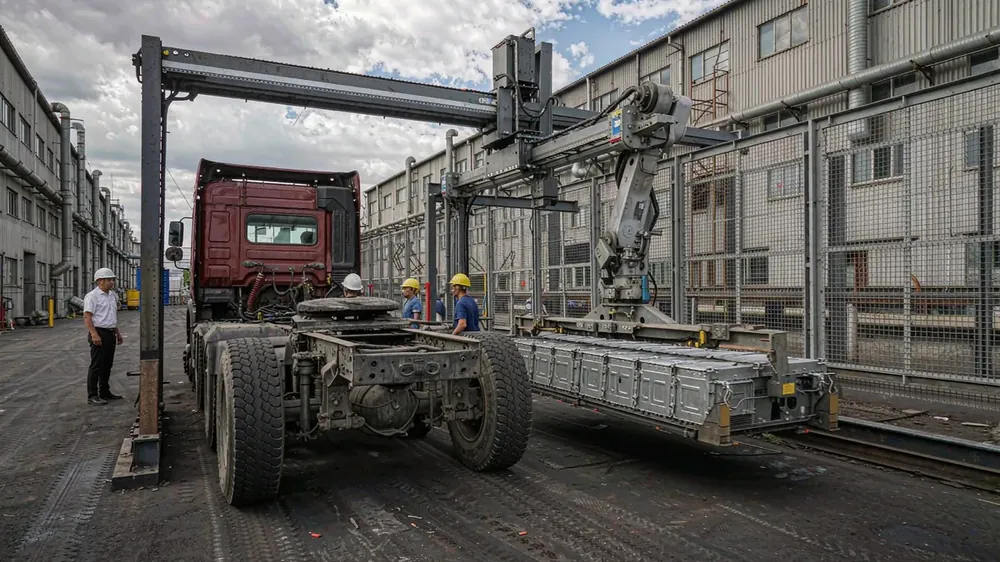
Key takeaway: For commercial-vehicle exporters, the real inflection is not a new model but standards for battery swap: two EV commercial-vehicle swap standards, GB/T 47961-2026 and GB/T 47967-2026, are published by the national body and set to take effect soon, unifying station communication, station control and swap execution. That moves swap stations from each-doing-its-own to cross-brand interoperability.
Numbers are hard: the plan calls for about 3,000 heavy-truck charge-and-swap stations by 2030, a 40% NEV truck penetration target and over 1.6 million units; in H1 2026 NEV heavy-truck sales reached about 140,000, up 78.6%. The transport ministry also earmarked 22 billion yuan this year for old-truck replacement, prioritising NEV trucks, lighting demand directly.
Run the math: a swap truck refuels in about 5 minutes versus often 1 hour for fast charge, adding 1 to 2 extra trips per day;
Impact lands in two layers. Standards: the two GB items unify messages and communication, cutting integration cost and easing cross-brand fit, breaking the 'info island' overseas buyers fear most.
Do three things: confirm with the factory that the model meets GB/T 47961/47967 protocols; map swap demand at the destination's mines, ports and line-haul; write swap-station build and spare-battery duty into the contract. Make swap compatibility and network planning pre-order items; do not wait for delivery to find no station to swap at.
Message us on WhatsApp for the latest prices and delivery to your country.
WhatsApp us