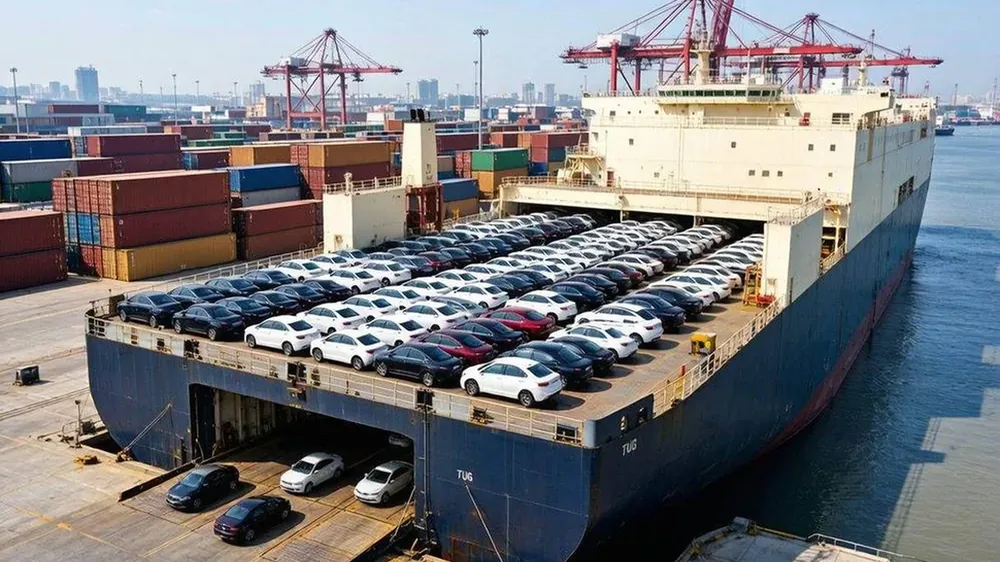
The key is that For overseas-channel importers, the plug-in hybrid is moving from sidekick to lead, and this trend deserves more attention than any single months total. CPCA data shows Chinas PHEV exports at 900k in the first half of 2026, up 115% year on year, and June alone at 210k, up 192%, far outpacing BEV to become the new export growth pole.
The background is uneven charging infrastructure.. BEV runs well where chargers are dense and power cheap, in northwestern Europe and some Gulf cities, but in sparse-charging, long-intercity, unstable-grid parts of Latin America, Africa, Central Asia and most of Southeast Asia, the PHEVs no-range-anxiety, fuel-or-electric flexibility fills the gap.
The market math is clear.. In a Latin American market importing 5k a year where weak charging limits BEV to 800 and PHEV to 4,200, the PHEV drives 84% of volume; at 15k yuan margin per unit, PHEV brings 63 million yuan a year, over five times BEV.
The impact on importers is stock and channel... PHEV volume means stocking two powertrains and two certification files, battery safety plus engine emission, so first-batch capital is higher but turnover faster and returns lower..
Before ordering, do three things. First, check CPCA by-powertrain data to confirm your markets PHEV acceptance and growth. Second, set the first-batch PHEV-BEV mix and swap mechanism in the contract, allocating dynamically by charging condition. Third, pre-build engine maintenance capability and fuel adaptation. Send the spec for a PHEV-versus-BEV landed-cost and margin comparison.
Message us on WhatsApp for the latest prices and delivery to your country.
WhatsApp us