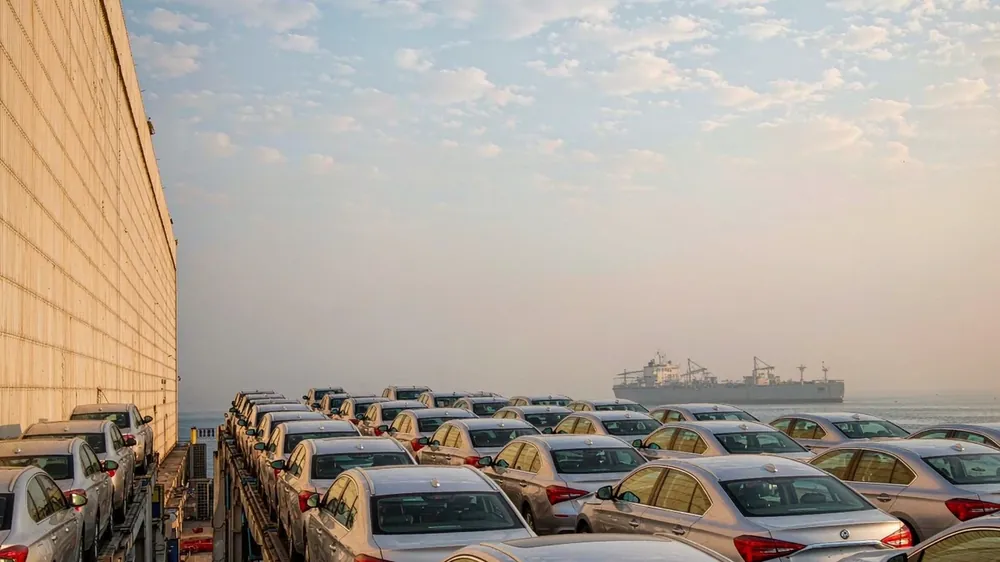
In the GCC, the real rival of a three-row plug-in hybrid SUV is not a pure electric vehicle, but fuel-burning peers like the Toyota Highlander and Hyundai Palisade. BYD ATTO 8 is launching simultaneously in Saudi Arabia, Oman, Kuwait, and Qatar, bringing the Middle East model lineup to 9 models (5 plug-in hybrids + 4 pure electric), indicating that the manufacturer believes large six-seat plug-in hybrids are a necessity for GCC families, rather than a novelty demand driven by subsidies. Over the past two years, GCC pure electric penetration has been stuck in the single digits, precisely because plug-in hybrids fill the gap for long family trips. For importers, the real question is not whether this car can sell, but how much ownership cost it can save customers per year compared to a gasoline SUV in a market where fuel subsidies and sparse charging coexist. That calculation is the key to whether a dealership can close a deal.
Let's first clarify the model: ATTO 8 corresponds to the export version of the domestic Tang L, with a large six-seat or seven-seat layout, a wheelbase of 2,950 mm, directly targeting mainstream GCC three-row SUVs. It offers two powertrains: the DM-i version has a combined range of 728 kilometers, and the DM-p version has a system power of 359 kW. The starting price is 156,900 Saudi riyals, equivalent to approximately 41,800 US dollars at the pegged exchange rate of 3.75 riyals to the dollar, and approximately 297,000 yuan at the rate of 7.1 yuan to the dollar. It will later enter the UAE and Bahrain; the four-country debut is the advance position for GCC distribution.
Let's calculate the ownership cost. In the Gulf, subsidized 95-octane gasoline is about 2.3 riyals per liter; a Highlander-class fuel SUV driving 20,000 kilometers per year costs about 9,200 riyals in fuel, while a same-size ATTO 8 DM-i, mainly using home charging and fuel for long trips, can reduce annual energy expenditure to around 3,500 riyals, a fuel difference of about 5,700 riyals per year, or 17,000 riyals over three years. Plug-in hybrids have no timing belt and no frequent major oil repairs, saving about 2,400 riyals in maintenance over three years. The message that can be forwarded as-is to fleet customers is: over three years, the cost of ownership is nearly 20,000 riyals less than the Highlander.
The impact on GCC dealers is threefold, and decisions must be made in advance. First, the logic of product selection has changed; previously, differentiation relied on pure electric, but now plug-in hybrids must be used to capture the base of fuel SUV buyers. When ordering, both the DM-i volume model and the DM-p image model must be taken together; missing one will lose the corresponding customer group. Second, tariffs and certification: GCC countries have different standards for pure electric and plug-in hybrids. Plug-in hybrids still have internal combustion engines, often requiring additional emissions and fuel tank safety items, with more customs clearance documents than pure electric, and delivery times must be reserved. Third, the three-electric warranty must be written into the agreement with the supplier; the warranty period for battery, motor, and electronic control, and the arrival cycle for spare parts must be in black and white, otherwise disputes over degradation under desert high temperatures will directly eat into profits. Of these three points, the most easily overlooked is the warranty clause, but it is precisely the first item GCC customers ask about when repurchasing.
Before taking action, ask the supplier for four things: the CIF cost breakdown for ATTO 8 in the four countries, the spare parts list and warranty terms for DM-i and DM-p, the list of documents required for plug-in hybrid certification in each country, and the landing schedule for the UAE and Bahrain. It is recommended to concentrate the first order on the mid-range DM-i, using its ownership cost difference against the Highlander as the dealership sales pitch; test the waters with a small batch of pure electric versions first. As soon as possible, write the three-electric warranty and high-temperature degradation commitments into the contract annex, and confirm with the supplier whether the Gulf after-sales network and spare parts forward warehouses can handle first-year demand.
Message us on WhatsApp for the latest prices and delivery to your country.
WhatsApp us