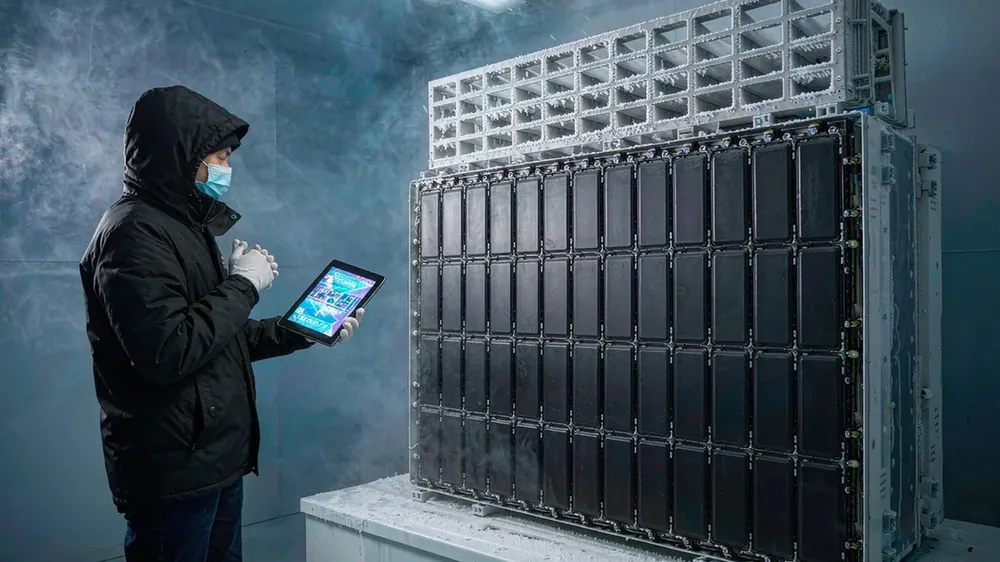
For export-minded importers the key point is that, the biggest draw of lithium iron phosphate (LFP) is low cost and safety, but what decides if it can sell into Russia and the Middle East is the cold-and-heat ledger. LFP loses capacity fast below 0°C, possibly only 60% to 70% at -20°C, and 55°C heat accelerates fade — and those two markets sit exactly at the two ends of the climate range.
The context is LFP becoming the dominant export cell in China. On cost and cycle life, LFP packs over half of China's EV fitment, and export models use it heavily.
The warranty math shows risk. If an LFP is rated 3,000 cycles with 8-year cover, yet at -20°C it holds only 65% and summer 55°C fades 20% faster, at 15,000 km a year on a 60 kWh pack the user may feel range drop below 70% of label by year three and trigger a warranty fight. A single pack swap runs USD 8,000 to 12,000; across 1,000 units that is USD 8 to 12 million in potential claims.
Three effects hit importers. First, get the supplier's measured capacity retention at -30°C and 55°C, not room-temperature data. Second, put cold/heat degradation thresholds in the contract with third-party retest and claim rights.
Before ordering, do three things. First, ask the supplier for the low- and high-temperature capacity report of the model. Second, write extreme-temperature warranty terms and retest rights into the contract. Third, prefer versions with a liquid-cooling thermal system. Send the spec to verify the battery climate fit of a specific model.
Message us on WhatsApp for the latest prices and delivery to your country.
WhatsApp us