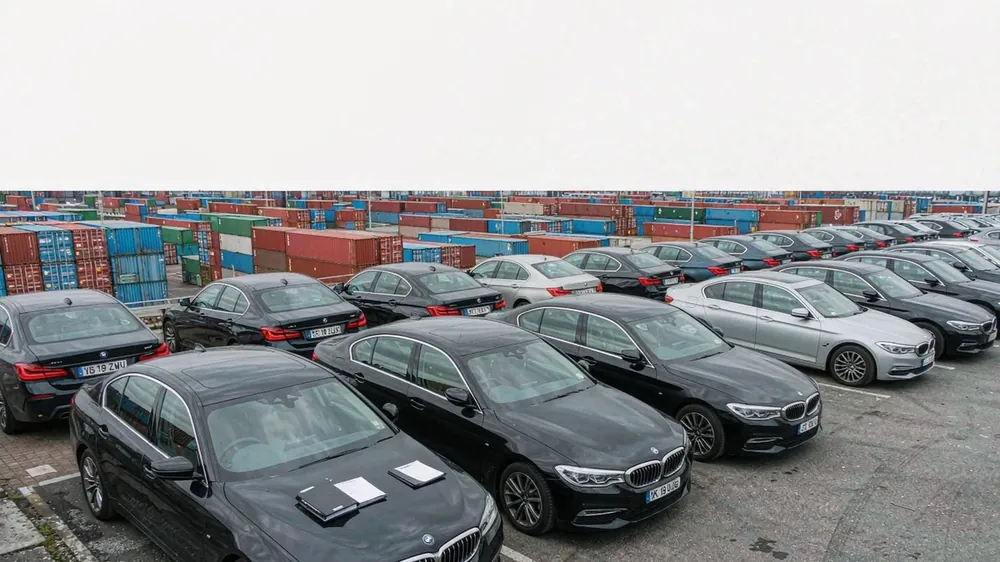
Turkey being found non-compliant means the price floor for Chinese EVs is no longer determined by the market, but pinned by the $8,500 minimum tariff, and low-value models will be the first to suffer. For importers working the Turkey route, what needs recalculating is not the 30% rate, but the fixed tax base added per vehicle: the cheaper the car, the higher this floor's proportion of the vehicle price, and the less room to negotiate with suppliers, because it is a floor, not a ratio. For channels focused on small and mid-size pure EVs, this line is the pricing benchmark, not a reference value.
The structure of the rule is: EVs imported from China and other countries are subject to an additional tax on top of the 10% base tariff, at a rate of 30%, but no less than $8,500 per vehicle, whichever is higher—meaning the additional tax has a floor price that ignores the transaction price. This measure has been brought to the WTO dispute settlement mechanism, and the relevant ruling found it non-compliant. The subsequent appeals and procedural deadlines requested by the parties have been extended to late October. Before the process concludes, this tax regime is still enforced by customs, and the tax calculation basis has not loosened; the landed cost on quotations will not come down on its own during the window period, and only low-priced vehicles are being repriced by this rule. In other words, $8,500 is the currently enforced tax calculation basis, not a transitional arrangement, and importers must calculate on this basis when booking space and quoting.
Laying out the formula: 8,500 ÷ 30% ≈ $28,300, which is the critical point for the additional tax. Below this line for CIF price, the $8,500 floor clause takes effect, pushing the effective additional tax rate above 30%; above this line, it is levied at 30%. For a small pure EV with a CIF price of $15,000, 30% is only $4,500, but the floor requires $8,500, making the effective additional tax rate 56.7%; plus the 10% base tariff of $1,500, the total vehicle tax is $10,000, or 66.7% of the vehicle price. Under the same tax table, a mid-to-large vehicle at $40,000 has an additional tax of $12,000 at 30%, plus base tariff of $4,000, totaling $16,000, or 40% of the vehicle price. The difference between the two is about 27 percentage points. Vehicles below this line are effectively fixed at the 56.7% tier—this is the arithmetic reason why low-value models are hit hardest. For vehicles above the critical point, 30% is the real tax rate; for those below, $8,500 itself is the tax rate, regardless of transaction price.
The impact on importers falls in three areas. Product selection will shift toward higher price segments: for models with a CIF price below $28,000, the per-vehicle tax burden approaches two-thirds, making gross margins hard to sustain, while mid-to-large vehicles and pickups have more controllable tax burden ratios; the same capital tied up in more expensive vehicles yields higher absolute per-vehicle profit. Quotation validity periods should be shortened: disputes are still in process, with procedural deadlines extended to late October, and any ruling could change landed costs; locking in prices for long periods means bearing policy risk yourself, and lock-in clauses of 30 days or more will become rarer. In-transit and inventory planning should be done in advance: if a ruling requires adjusting the tax regime, rush shipments and customs clearance within a short window will bunch up, and shipping schedules and port timeliness will tighten. More troublesome is the model mix: in the same order batch, the higher the proportion of small and compact models, the greater the total tax burden amplified by the floor tax, and the overall cost of the entire shipment will be driven up by low-end models.
This month, three things are recommended: first, have suppliers produce separate landed cost tables based on the $8,500 floor and the 30% rate, and compare the two tables—only then will you know which line your main models fall on, and see whether raising prices or changing configurations is more cost-effective; then sort models by CIF price and list low-value configurations below $28,300 separately, assessing whether to upgrade configurations and change prices or switch models; finally, specify tariff change clauses and price lock periods in contracts, requiring an executable price window before late October. Send the model list and configuration sheets to Chinese suppliers, and typically within two to three days you can get tiered quotes and production scheduling windows. Quotation tables should specify currency and CIF basis to avoid mixing tariff bases with freight, so the calculated tax rate is accurate.
Message us on WhatsApp for the latest prices and delivery to your country.
WhatsApp us