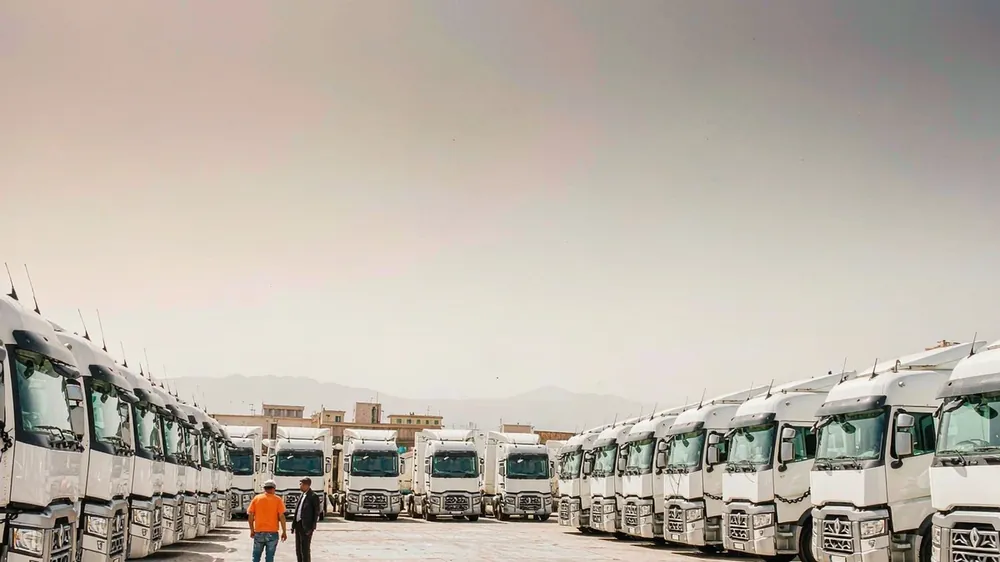
Algeria needs 500,000 vehicles a year but lets in fewer than 100,000. What blocks Chinese cars isn't price, but the two gates of authorization and foreign exchange. For importers, the real threshold isn't the vehicle price—it's whether you can obtain an import license and whether you can convert dinars into the hard currency to pay for the vehicles. No matter how cheap the car is, if it can't pass these two gates, it's just inventory sitting at the port, not a car that can enter a showroom and sell. Many newcomers treat Algeria as a price-war market, but it's actually a license-war market. Understanding this threshold matters far more than staring at the CIF price of a single vehicle. Quota decides a deal before vehicle price does; a low vehicle price is only the entry ticket, while the gate is the ticket office. In Algeria, the gate determines profit more than the vehicle price does.
In the first half of 2026, Algeria imported 143,012 vehicles from China, a net increase of about 100,382 year-on-year, leaping to become China's 10th-largest vehicle export market; for the full year 2025, it imported 96,418 vehicles from China. On the surface, volume is rising, but another figure is more telling: Algeria's annual domestic vehicle demand is about 500,000, while annual imports are only on the order of about 96,000, leaving a huge gap. Under the current import regime, imports must go through authorization and quota management and are subject to foreign exchange controls, which means it's not that you can buy if you have money, but that you can buy only if you have quota. Demand is there, and the gate is there too; the difference in between is the real opportunity, and it doesn't care about vehicle price. Even with money you can't buy; you need quota to buy. You can't buy because you have no quota, not because you have no money.
Do the math on the system. Demand is about 500,000 vehicles and annual imports are about 96,000, covering only about 19% of demand. The gap of about 400,000 in between cannot be filled by price—importers who can obtain authorization and foreign exchange settlement channels have their per-unit gross margin protected by the official pricing system, making them more stable than the price-competition secondary market; those who cannot get authorization can only do secondary reselling, with profits squeezed thin. A conclusion worth repeating: demand of 500,000 versus annual imports of less than 100,000—what's missing are the two gates of "license + foreign exchange quota," not vehicle price. Algeria also stipulates that individuals may purchase a vehicle only once every 3 years and that imported vehicles must be less than 3 years old. These two rules directly shut down the line of used cars and nearly new cars. A price war can't be fought in Algeria, but a license war can. Rather than cutting ex-factory prices further, suppliers would do better to help buyers secure quota. In other words, between the 500,000 on the demand side and the 96,000 on the supply side, what's missing is institutional capacity, not consumers' wallets.
There are two clear paths for importers. (A) Go through official authorized bulk imports: a local entity is needed to apply for import authorization and obtain foreign exchange quota. Vehicle price is actually not the first gate; whether you can get quota is. (B) Suppliers must cooperate by providing nearly new/new vehicles less than 3 years old, certificates of origin, and a full set of compliance documents; otherwise, customs clearance in Algeria will be stuck at the port. Note: Algeria has repeatedly tightened imports historically, and from 2018 to 2021 it nearly closed the border. The quota itself is a policy variable—if the contract does not include a policy change clause, you are leaving your profit in someone else's hands. If quota is tightened one day, orders already placed may be stranded in transit. The historical lesson is right before our eyes; once quota is tightened, all prior investment is left hanging.
Before quoting, confirm two things: whether the buyer has a local import authorization entity and foreign exchange quota. If not, don't take large complete-vehicle orders; better to start with small trial orders. Ask the supplier for three documents—proof of compliance that the vehicle is less than 3 years old, a certificate of origin, and the list of documents required for Algerian customs clearance. The contract must include a policy change clause: if Algeria tightens quotas or foreign exchange, who bears the price difference on orders already placed, and whether orders can be diverted to another port. Writing the policy change clause as a triggerable suspension and port-diversion mechanism preserves value better than haggling over three points; starting with small trial orders before discussing large orders is more stable than going all in. Whether the channel is stable depends on authorization and foreign exchange, not on the discount level in the showroom. If you need to confirm the landed cost and authorization path of a certain model in Algeria, you can provide a configuration list to obtain a quote.
Message us on WhatsApp for the latest prices and delivery to your country.
WhatsApp us