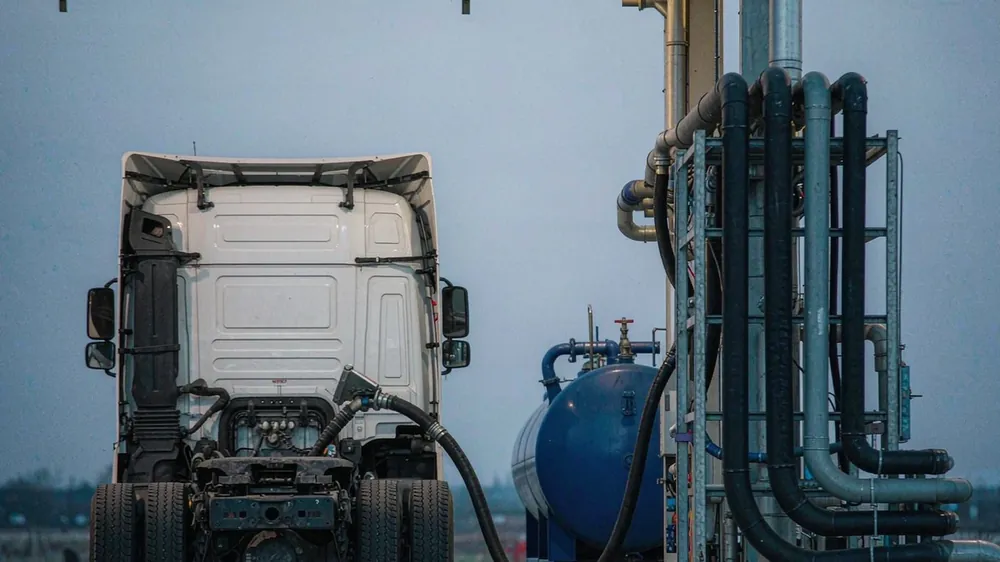
What truly deserves importers' attention is not the 16,000-unit promotion figure, but that China for the first time ran hydrogen station permits, delivered hydrogen prices, and vehicle costs through the same pilot table. The selection judgment is not complicated: for heavy-duty scenarios with locked routes and concentrated hydrogen station construction—such as ports, mining areas, and fixed trunk lines—hydrogen fuel cells are more suitable than pure electric. Open long-haul highways are not yet ready for them—trucks can be built, but hydrogen stations cannot follow the vehicles, and without intermediate refueling points on trunk lines, the vehicles are just idle assets. This judgment is more decisive for your procurement list than any pilot press release; in markets where routes are not locked, do not pay a premium for hydrogen vehicles yet.
The Guangdong Provincial Development and Reform Commission and other departments deployed a comprehensive hydrogen energy application pilot in the Guangdong-Hong Kong-Macao Greater Bay Area, aiming to promote 16,000 hydrogen fuel cell commercial vehicles and build 100 new hydrogen refueling stations over 4 years, covering 5 city clusters. First, clarify the scope: 16,000 units is the cumulative promotion volume during the pilot period, not annual sales; 100 stations spread across 5 city clusters average about 20 per cluster, meaning one-fifth of the stations fall within the same cluster. The service radius of a single station determines the range these vehicles can operate—they can run on the lines with stations, not on any road on the map, which also explains why the pilot first landed in city clusters rather than spreading across the entire province.
This is a different technological route from the battery-swapping pure electric heavy trucks in late September, not just a different refueling method. Battery swapping solves "how fast electricity can be replenished," relying on battery asset pools and standardized battery packs to amortize costs, and after vehicle-battery separation, the purchase threshold will also drop; hydrogen fuel solves "how far a load can go," relying on hydrogen storage systems to exchange for energy density and load margin. The refueling feel is close to diesel, but the cost focus has entirely shifted: hydrogen vehicle costs are concentrated in vehicle purchase, hydrogen storage system maintenance, and delivered hydrogen price, while pure electric heavy trucks are concentrated in battery capacity and station-side power capacity. Whether the cost per ton-kilometer can undercut pure electric depends on two numbers: delivered hydrogen price and hydrogen station utilization rate. Before these are clarified, "hydrogen is definitely cheaper" does not hold. Refueling must also be compared on the same basis: hydrogen heavy trucks take about 10 to 15 minutes per refueling, close to diesel; battery-swapping pure electric heavy trucks take 3 to 5 minutes; charging heavy trucks take over 30 minutes—this compares single refueling duration, not actual dwell time after queuing. Infrastructure investment is the same; what should be compared is the fixed amortization per kilogram of delivered hydrogen, not the cost of a single station: whether the station is next to a by-product hydrogen plant or relies on long-distance hydrogen transport can differ by an order of magnitude in amortization.
What can be replicated overseas is actually the sequence, not the 16,000-unit figure: first a stable hydrogen source and delivered price, then fully permitted hydrogen stations, and finally batch vehicle entry. The suitable market profile is clear—ports and mining areas come with cheap industrial by-product hydrogen or renewable electricity, the government is willing to provide land and approval channels for hydrogen stations, trunk lines are fixed, and vehicles are centrally dispatched. Conversely, in markets where hydrogen must be transported long-distance or there is no approval path for station construction, starting with pure electric heavy trucks is more stable, at least without worrying that stations cannot be built. In other words, the threshold for hydrogen vehicle selection is not the vehicle itself, but whether cheap hydrogen can be stably delivered to the station.
When evaluating hydrogen vehicle projects, first verify three items: hydrogen source and delivered price (clearly state whether it is industrial by-product hydrogen, natural gas reforming, or water electrolysis, and uniformly verify on a per-kilogram delivered price basis), hydrogen station permits (land nature, approval authority, whether social vehicles are allowed to refuel), and certification and test reports for the vehicle's three electric systems and hydrogen storage system (hydrogen tank type tests, fuel cell system certification). If any of the three cannot be implemented, the project should not enter procurement negotiations; discussing vehicle price first is equivalent to talking in vain. To verify the landed cost of hydrogen fuel commercial vehicles and pure electric heavy trucks for specific models, configuration lists and target markets can be provided to obtain quotes.
Message us on WhatsApp for the latest prices and delivery to your country.
WhatsApp us