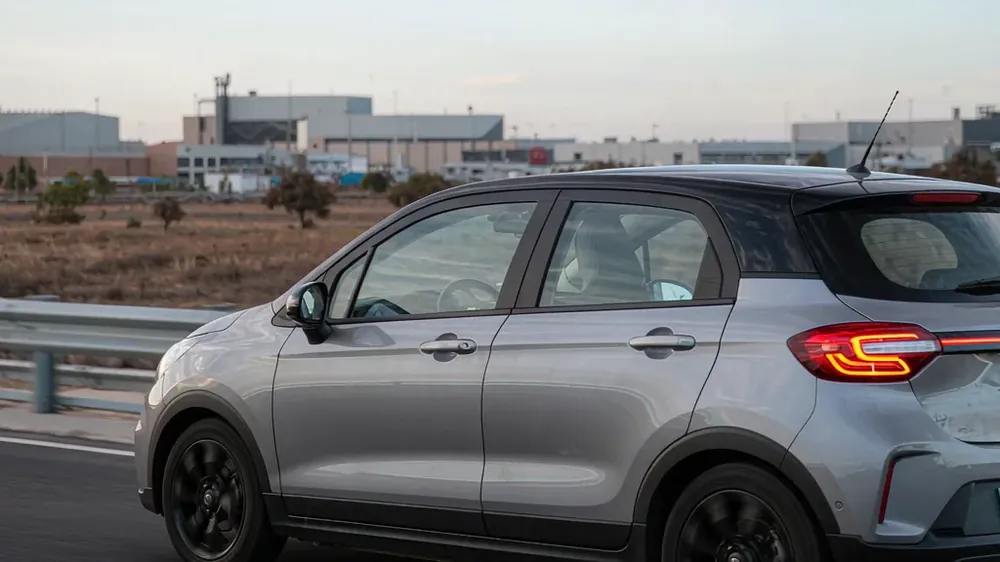
Key takeaway: Chinese small EVs are shifting from micro scooters to proper city cars. Chery's QEV launched in the Philippines at PHP 1.12 million (about RMB 130,000) as a real compact hatchback, while BYD's Racco is the first BEV K-car built specifically for Japan. Custom products are replacing low-price volume as the export playbook.
Hard numbers: the QEV packs a 42.7 kWh LFP battery with 405 km NEDC range, a 2700 mm wheelbase in a 4195 mm body, 120 hp rear drive, an 8155 cockpit chip, 90 kW fast charging in 16.5 minutes, and 6.6 kW V2L discharge. This value targets first-time family buyers across Southeast Asia.
BYD Racco attacks Japan's hardest segment: three trims with up to 320 km range, priced from JPY 2.145 million (about RMB 93,000), targeting 10,000 units a year. Engineered around Japanese regulations and driving habits, it proves Chinese brands will invest in market-specific development.
Competition is heating up: Suzuki's e SKY, a 310 km BEV K-car, lands in Japan this autumn and heads to Europe in 2027, while Wuling's Aira starts at IDR 155 million (about RMB 68,000) with 205-301 km options. Success now depends on homologation and channel networks, not price alone.
Action for buyers and exporters: keep micro cars and compact sedans in separate catalogs — regulations, price bands and rivals differ completely; match range to local charging infrastructure; and check locally developed models like the QEV and Racco first — fewer homologation and after-sales pitfalls.
Message us on WhatsApp for the latest prices and delivery to your country.
WhatsApp us