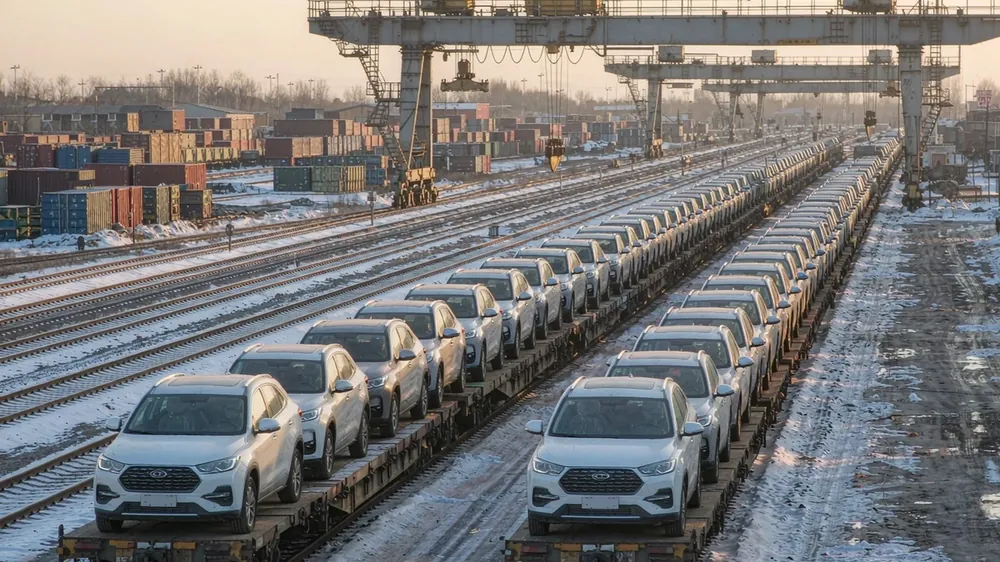
When looking at China-Russia auto trade, the cumulative structure is more worth studying for importers than monthly fluctuations: Russia's new car sales from January to August were 920,000 units, up 6% year-on-year, but in August alone only 124,000 units were sold, down 8% year-on-year, showing a divergence between monthly and cumulative figures. Look at the cumulative for trends and the monthly for pace. When the two diverge, trust the cumulative first, then check the monthly—this is the most cost-effective order for reading China-Russia trade data. China exported 638,000 vehicles to Russia, while Chinese self-owned brands sold only 500,000 units locally in Russia, accounting for 78% of exports. This 138,000-unit gap is not a statistical error but the real destination of channel inventory, goods in transit, and re-exports. If you can read it, you can avoid the next round of inventory buildup; if you cannot, you will passively take orders in a price war, afraid to stop as prices fall further.
First, lay out the definitions before looking at the numbers. Under China Customs definitions, vehicle exports to Russia from January to August exceeded 688,000 units, with a value of 9.08 billion USD, up 2.2 times year-on-year. This differs from the 638,000 units reported by the CPCA due to definitional differences—one counts customs declarations, the other wholesale. Importers must unify definitions before comparing; if definitions are inconsistent, price comparisons are untenable, and the same market can yield two different conclusions. In August alone, China exported 96,700 vehicles to Russia, while self-owned brands sold 65,000 units locally in Russia during the same period, accounting for only 68% of exports, 10 percentage points lower than the cumulative 78%. This gap is a signal of inventory buildup and the key to deciding whether to push the next batch of orders. Unifying definitions is a step easily overlooked by outsiders but first confirmed by insiders; don't let definitional errors mask the real pace of arrivals.
Where the gap went is the core of this article. The 138,000-unit gap has three destinations: first, inventory held by dealers and ports; second, re-exports via third countries such as Kyrgyzstan; third, Chinese-made global brand cars sold in Russia—65.7% of such cars from January to July were made in China. These three destinations point to the same judgment: good export numbers do not mean the end market has absorbed them. Batch sizes should be set according to the real absorption capacity of the channel. On the cost side, also keep an eye on: Russia's recycling tax has been tiered by engine power since December 2025, with 160 horsepower as the watershed. For a 150-horsepower car, the personal import recycling tax is about 3,400 rubles, while for 180 horsepower it jumps to about 114,600 rubles—a 30-horsepower difference of over 110,000 rubles. Details expose risks better than totals.
The implications for importers are direct. In the Russian market from January to July, Chinese brands held about 40.9% share, while Russian domestic brands held 40.6%, nearly equal; but in the same period, pure Chinese brand sales fell 17% year-on-year, while the overall market grew 12.2% year-on-year, indicating that exports are rising while retail is slowing, with the difference eaten by inventory. Close market share does not mean business is easier; rather, it shows that bargaining power is shifting from sellers to buyers, and the window for past price markups to secure cars is basically closed. The average new car price has reached 3.8 million rubles, combined with higher recycling taxes and tighter car loans, the model of pushing volume through inventory buildup now carries more risk than reward. For importers, the real rival is not Russian domestic brands but the batch of goods on the same route that arrived half a month earlier than yours—whoever cuts prices first clears inventory first.
It is recommended to schedule subsequent batches around two time points: the annual indexation window for Russia's recycling tax, and the certification cycle for СБКТС and ОТТС. Staggering these two time points can smooth out funding pressure; if certification days and transit days are not clearly stated, a delay in delivery means interest on an entire batch. Request three documents from suppliers, and hold off if any is missing: first, the engine power and corresponding recycling tax coefficient table for the target model; second, the СБКТС or ОТТС certification status and expected days to issuance; third, the transit days and arrival definitions via Manzhouli or third-country re-export. If you need to confirm the landed cost, certification cycle, and batch pace of a specific model in Russia, provide the VIN and configuration list to get a quote. First lock down taxes and certification, then discuss volume and rebates—the order cannot be reversed.
Which markets demand the most Chinese vehicles?
Latin America, Central Asia & CIS, the Middle East, Africa and the EU all show steady demand with different preferences (e.g. pickups and SUVs in Central Asia, heat-resistant models in the Middle East). EZ Auto supplies all five regions equally, without betting on a single market.
Where can I check Chinese vehicle export data?
Export volumes, destination registrations and import figures are published by China Customs and destination statistics offices. EZ Auto's News section digests the key trends so buyers can judge quickly.
How do shipping cost swings affect my purchase?
Freight is a meaningful share of landed cost and moves with capacity and fuel. EZ Auto locks the shipping method and timing at contract and quotes major pre-arrival costs to limit mid-way price changes.
How do exchange-rate swings affect export quotes?
RMB and destination-currency fluctuations affect landed cost. EZ Auto stamps a validity period on quotes, and volume orders can lock an exchange-rate window to reduce price-change risk.
Which models hold value better in target markets?
Resale value depends on local parc size, parts availability and brand recognition. EZ Auto advises model choices based on the destination's market rather than simply pushing high-margin units.
This article is published by EZ Auto. EZ Auto (Cheyixing Automobile Import & Export) specializes in exporting Chinese vehicles — new, used and parts — serving Latin America, Central Asia & CIS, Africa, the Middle East and the EU, with order-based sourcing, inspection with photo report, export documentation and ocean freight in one place.
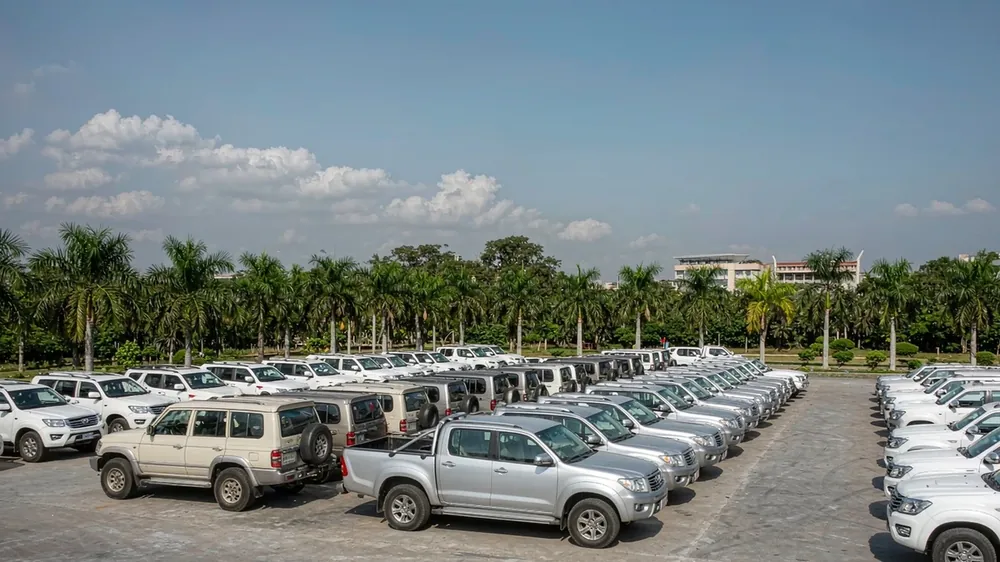 South Africa imports 390,000 light vehicles, up 28.6%: channels are scarcer than quotesIn 2025, South Africa imported 391,287 light vehicles, up 28.6% year-on-year, with India accounting for 56.2% and China
 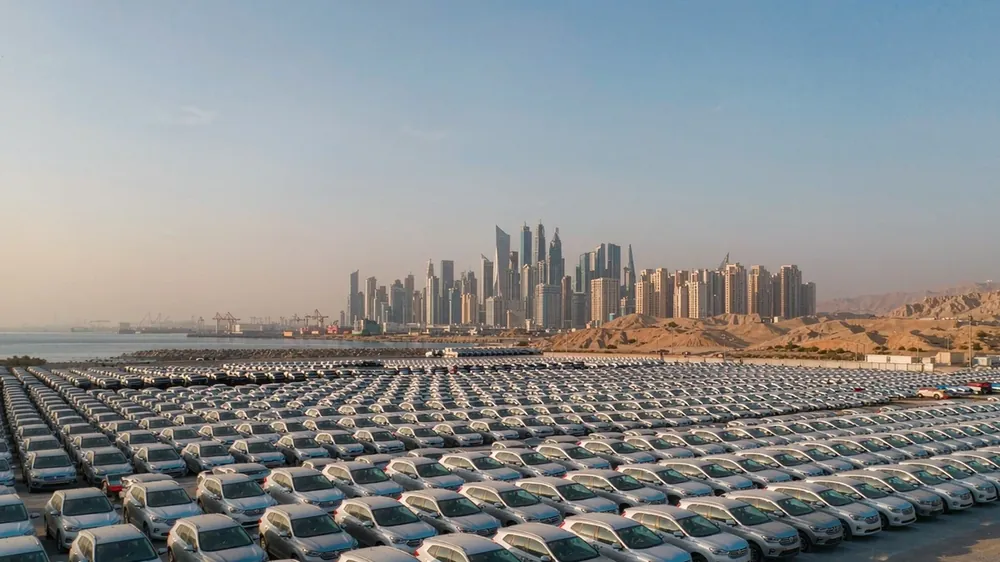 Saudi Arabia imported 1.9 million vehicles in two years, China ranks first: what's missing is channels, not carsSaudi Arabia imported about 1.9 million vehicles from 2024 to 2025, with China ranking first among source countries and
  Pakistan Vehicle Imports Up 36%: Start with Small-Batch CBU, Then Discuss CKDPakistan Bureau of Statistics data: July–August imports of new and used vehicles totaled US$81.4 million, up 36% year-on
 Chinese car imports Vietnam: the $35,300 average betVietnam imported 44,335 Chinese CBU cars worth $1.567bn in eight months: volume +45.9%, value +58.8%, average $35,300. T
 99% of Uzbekistan's Pure Electric Imports Come from China: Opportunity in Channels, Risk in Single Point99% of Uzbekistan's imported pure electric vehicles are made in China; during the same period, Zhejiang's electric vehic
Message us on WhatsApp for the latest prices and delivery to your country.
WhatsApp us