
From April 1, 2026, Russia applies stricter certification and customs requirements to imported vehicles, with two core changes. First, an instruction from the Russian Federal Customs Service requires direct import, ending the previous model of routing vehicles into the Russian market via "friendly countries" such as Kyrgyzstan, Belarus, and Kazakhstan for arbitrage. Second, vehicles brought in personally from EAEU member states are now subject to full taxation and fees under commercial import standards. This means the cost advantage of gray channels has been drastically squeezed, formal customs clearance has become the only sustainable path, and transparency and compliance in the import process have improved markedly — forcing traders who previously relied on re-exports to restructure their supply chains.
At the same time, audit enforcement for SBKTS (СБКТС) technical certification and the ERA-GLONASS emergency call system has clearly tightened: the review of Russian-language technical documentation is more granular on format, stamps, and terminology, there are more cases of GNSS cold-start positioning failures, and the likelihood of additional submissions and re-inspections has risen. While no new certification items have been added, the difficulty of "passing on the first try" has increased, and the professionalism required for document preparation has grown significantly — the old practice of submitting materials by experience and luck is no longer viable. Document quality and attention to detail now directly determine how long the certification cycle takes.
From a practical standpoint, the SBKTS certification cycle is roughly 2–3 months (with complete documentation and a first-time pass), the certificate is valid for 5 years, and it is mandatory for M1/N1 category vehicles. Foreign manufacturers may authorize a local EAEU representative to apply. After combining customs duty, scrappage (recycling) fees, and VAT, the landed cost of a Chinese car is approximately 2.0–2.2 times its EXW price in China. Certification compliance directly affects cost and delivery lead times: if certification is delayed by additional submissions or re-inspections, the working-capital lockup per vehicle lengthens accordingly, making capital efficiency a variable importers must manage. Conversely, models with certification in place can be scheduled for production steadily and delivered on time, becoming a scarce resource when supply chains tighten. Importers are advised to build long-term partnerships with Russian-qualified technical service organizations, stay on top of regulatory detail updates, and avoid disruptions to in-transit order lead times and cost calculations from policy fine-tuning. They should also monitor Russia's follow-up policies on parallel imports and used cars, and plan separate certification paths for different vehicle categories.
For importers sourcing vehicles from China, the most direct impact is: models that have not completed certification in advance may see customs clearance extended by 1–2 weeks, and some models not yet on Russia's certification list may be impossible to deliver as planned. It is advisable to confirm the certification status of target models before ordering, treat certification as part of the purchase decision rather than a remedy after the fact, and include the certification cycle as a delivery-term clause in contracts to reduce breach risk. At the same time, prefer mature models that have already completed SBKTS certification with complete documentation, keeping uncertainty out of the contract.
EZ Auto verifies each order's certification status before processing and prepares the corresponding documents in the clearance package to avoid port hold-ups caused by certification issues. Contact us on WhatsApp for compliant sourcing and certification arrangements for the Russian and CIS markets.

CPCA data shows Chinese self-owned brands took a 54.9% share of the Russian market in June, but with VAT raised to 22% and the scrappage fee rising to roughly 800,000-900,000 rubles, compounded by the taxi localization law, the era of effortless gains from complete-vehicle exports is over.
→ Read
On July 21, the Kazakh Prime Minister ordered the development of comprehensive measures to curb illegal car imports; the new customs enforcement and technical regulation measures must take effect from September 1, putting the gray channel of bulk personal-name imports on the path to a full shutdown.
→ Read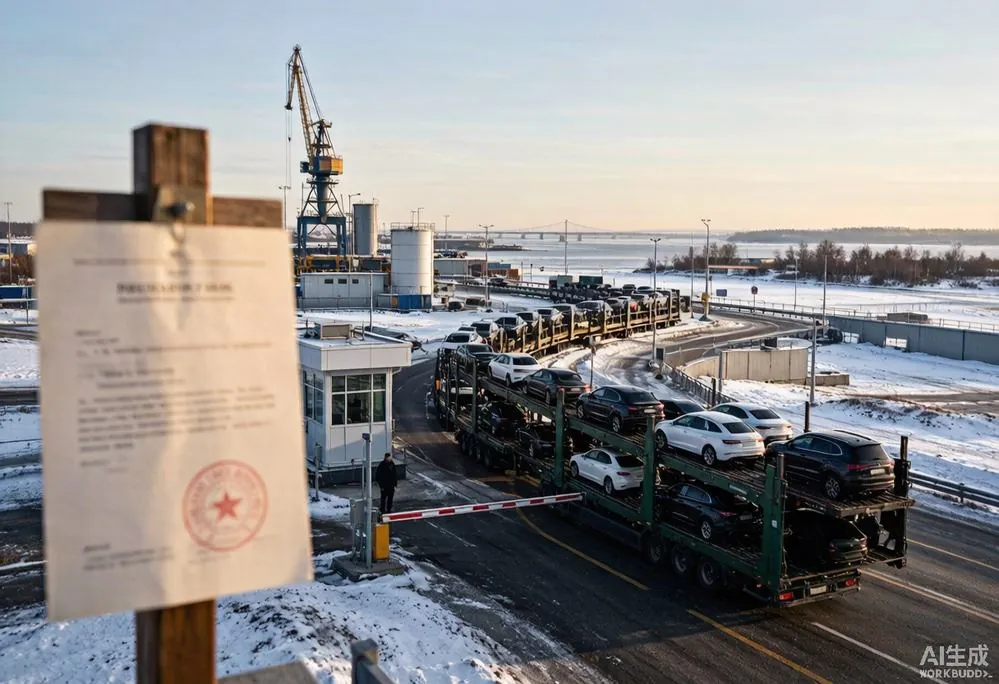
Effective July 1, 2026, Russia has once again raised the recycling fee coefficient for used cars by 18% to 25%. Combined with the cancellation of the low-rate personal import channel in April, gray-market space is being squeezed further, making compliant bulk imports by legal entities the mainstream channel.
→ ReadMessage us on WhatsApp for the latest prices and delivery to your country.
WhatsApp us