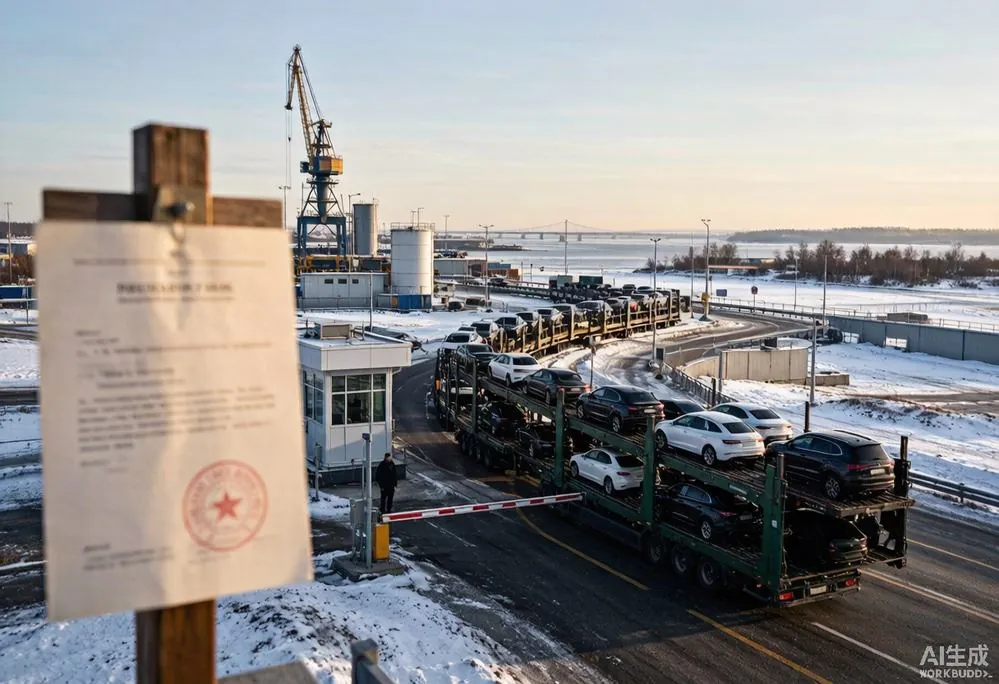
Effective July 1, 2026, Russia has once again raised the recycling fee coefficient for used cars by 18% to 25% (with some sources citing up to 30%). For a three-year-old 2.0L hybrid SUV, the recycling fee jumps from around 600,000 rubles to over 750,000 rubles, adding roughly RMB 12,000–18,000 to the cost per vehicle. This marks another tightening of Russia's import tax burden within the year, following the comprehensive overhaul of recycling fee rules on April 1, 2026.
Russia's recycling fee adjustments have been escalating since 2024: the fee soared by 70%–85% in October 2024, with annual increases of 10%–20% confirmed for 2026–2030; in 2025, import tariff coefficients were raised to 20%–38% and VAT was lifted from 20% to 22%. From April 1, 2026, personal and commercial imports were placed under unified standards, completely shutting the door on low-tax imports registered under a personal name. The tax base also shifted from engine displacement alone to a dual dimension of displacement plus power: models exceeding 160 hp no longer qualify for the low rate of around 3,400 rubles and instead incur commercial rates of over 750,000 to 1 million rubles. Meanwhile, vehicles imported from EAEU member states must now top up the recycling fee differential within Russia, closing the gray channel of routing cars through neighboring countries with lower tariffs.
Against this policy tightening, the structure of Russia's import market is being reshaped. On the complete-vehicle export side, China's exports of complete vehicles to Russia reached 357,700 units in the first nine months of 2025, down 58% year on year from 851,700 units in the same period of 2024, dropping Russia from China's largest to its third-largest auto export market. Used-car exports, however, are growing against the trend: from January to May 2026, China exported 142,000 used cars to Russia, up 47% year on year, with value surpassing USD 2.3 billion. In March alone, Chinese used cars accounted for 19.7% of Russia's imported used passenger vehicles, making China the second-largest supplier. Behind the contrast of frozen complete-vehicle exports and booming used-car exports lie shrinking new-vehicle supply and high prices in Russia, which are pushing demand into the used market. In June, China's auto exports to Russia still reached 84,400 units, with Chinese independent brands holding a relatively high market share of around 54.6% in Russia.
For exporters targeting the Russian market, this combination of measures means three changes. First, personal-name imports and gray re-export channels have largely exited the stage, making compliant bulk imports by legal entities the only sustainable path. Second, Russia prohibits Chinese cars from entering through the corporate parallel import channel, which objectively avoids low-price competition from unauthorized dealers and favors official authorized exports. Third, the cost structure has been fundamentally altered — the recycling fee has become the third-largest cost item after tariffs and VAT, and quotes still calculated on the old basis could produce losses of tens of thousands of yuan per vehicle.
Exporters are advised to immediately redo full-cost calculations for the Russian market, itemizing the recycling fee (dual dimension of displacement plus power), tariffs, VAT, and certification costs. Prioritize official authorization or legal-entity bulk import channels to avoid becoming entangled in gray re-export disputes. At the same time, keep an eye on the schedule of 10%–20% annual recycling fee increases from 2026 to 2030, and be sure to build room for rising tax burdens into long-term fixed-price contracts. For registered used-car export enterprises, Russia remains the largest single market, but profit margins are shifting from betting on policy dividends to calculating the fine print of compliance.

CPCA data shows Chinese self-owned brands took a 54.9% share of the Russian market in June, but with VAT raised to 22% and the scrappage fee rising to roughly 800,000-900,000 rubles, compounded by the taxi localization law, the era of effortless gains from complete-vehicle exports is over.
→ Read
On July 21, the Kazakh Prime Minister ordered the development of comprehensive measures to curb illegal car imports; the new customs enforcement and technical regulation measures must take effect from September 1, putting the gray channel of bulk personal-name imports on the path to a full shutdown.
→ Read
From April 2026 Russia tightened import vehicle certification and customs clearance: new direct-import rules took effect and certification audits are enforced more strictly, leaving compliant importers better off.
→ ReadMessage us on WhatsApp for the latest prices and delivery to your country.
WhatsApp us