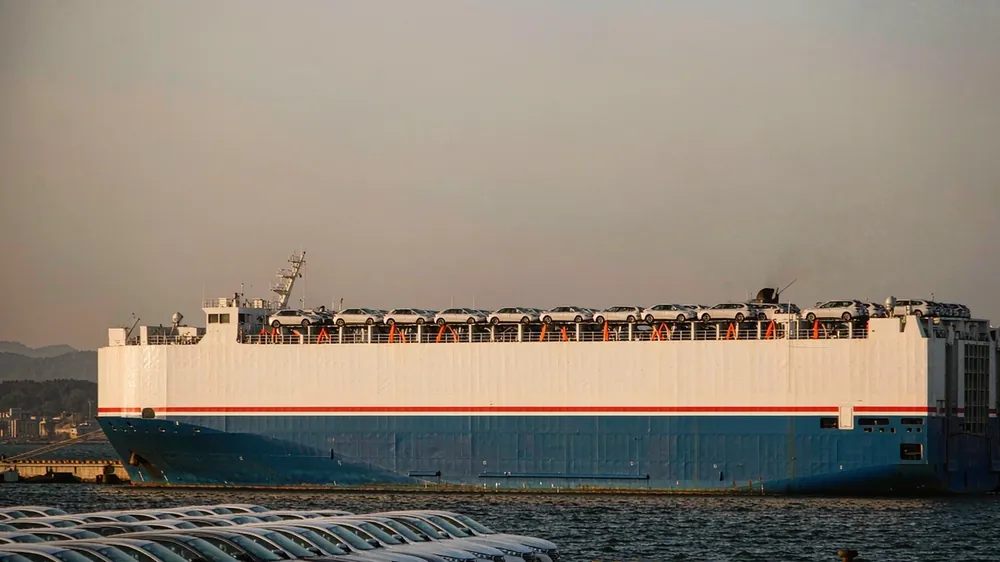
Chinese brands have captured 43% of the Israeli market, meaning this market has passed the stage of "teaching customers to recognize brands": profits now grow from inventory turnover and residual value judgment. According to data from the Israel Ministry of Transport's Licensing Bureau for January to August, Chinese brands accounted for about 43% of new car deliveries. Omoda Jaecoo ranked first among brands with nearly 30,000 units, Chery with 24,000 units, and BYD with 15,800 units. Plug-in hybrids also saw 96.6% coming from Chinese brands. Simply put, local dealers are now competing with Chery and BYD for quotas, not with Toyota for customers. Quota ranking and residual value curves are the two unavoidable terms this year.
Four years ago, it was the opposite. In 2022, nine of Israel's top ten sellers were Japanese, Korean, and European brands. Importers had invested for decades in brand loyalty and trade-in residual values. In the first eight months of this year, Chinese brands took six of the top ten spots. Toyota fell to third with about 23,700 units, Hyundai with about 21,000 units, and Kia with nearly 20,000 units. In August alone, Chinese brands sold 13,820 units, a 49.1% share, up from 36.3% a year earlier. Israel's new car sales from January to August were 231,514 units, a year-on-year increase of 8.8%. Chinese brands have already exceeded 100,000 units in imported passenger cars during the same period, and Chinese cars account for over 70% of pure electric vehicle sales.
Breaking down the numbers makes it clearer: 43% of 231,514 units is about 99,600 units, of which Omoda Jaecoo, Chery, and BYD together account for 69,800 units, or 70% of the Chinese share. The remaining approximately 30,000 units must be divided among the other sixteen or seventeen Chinese names on the list, averaging less than 1,900 units per brand over eight months. This volume cannot support independent parts warehouses and authorized repair networks, so importers of second- and third-tier Chinese brands can only absorb after-sales costs themselves. Concentration is still rising: Chery Group's Omoda Jaecoo and Chery together account for about 54,000 units, already more than half of the Chinese share, and bargaining power is entirely in the hands of suppliers. The more Chinese names on the list, the thinner the volume per brand—this is inherently two sides of the same coin. Without volume, there is no pricing power for parts, and the reputation of the service network in turn suppresses sales.
There is also a tax calculation: in January 2026, the purchase tax on pure electric vehicles will rise from 45% to 48%, and the tax benefit cap will be cut from 35,000 shekels to 22,000. The lost 13,000 shekels, for 500 units a year, amounts to a 6.5 million shekel gap—either raise prices or absorb it from gross margin. The price war has also shifted from fighting for customers to fighting for order ranking. Israeli buyers will change orders within days because a competitor is a few thousand shekels cheaper, and the price list has shifted down by about 15% overall: a car with an on-road price of 200,000 shekels drops by 15%, or 30,000, and holding 40 units in inventory means a write-down of 1.2 million shekels. The plug-in hybrid segment is relatively safe: 96.6% of plug-in hybrids are Chinese cars, and company car private use benefits still offset 1,130 shekels per month for plug-in hybrids and 1,350 shekels for pure electric. These three calculations must be done together; looking only at FOB quotes will lead to errors.
Follow this approach: first, request three sets of materials from suppliers—actual deliveries to Israel from January to August, not order volumes; purchase tax tier calculations for target models by configuration; and the city distribution of local authorized repair points. Then, write inventory days into the contract: batches unsold for more than 45 days will have price reductions shared by the supplier. Limit the agency portfolio to no more than two Chinese brands: the main brand for volume, the secondary brand to fill price segments. Update residual value curves quarterly, and do not use last year's used car prices to set this year's order volume. If you cannot obtain the actual delivery volumes from January to August, do not sign an annual framework yet. To calculate Israel's landed price, tax tiers, and residual value curves for specific models, send over the configuration list, and I will break it down by tier for you.
Message us on WhatsApp for the latest prices and delivery to your country.
WhatsApp us