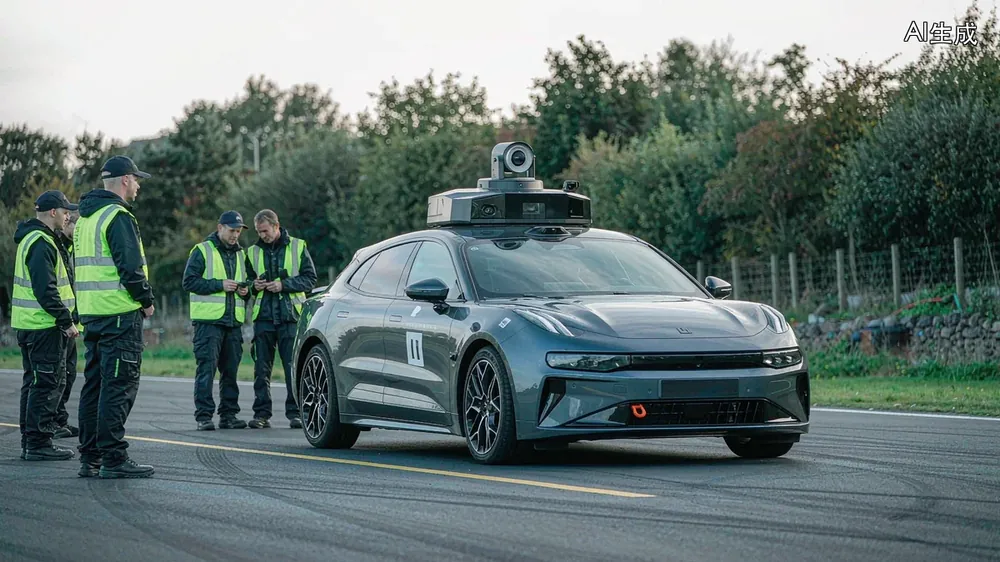
The bottom line: The easiest trap in importing cars with advanced driver assistance, often called L2+ or L3, is a car that drives in China but cannot be registered at destination. The root is regulation: under the UN WP.29 framework, R155 on cyber security management and R156 on software update management are already preconditions for new-car type approval in the EU, UK, Japan and South Korea, focused on auditable security and OTA processes, not just sensor counts.
For importers the key is not the spec-sheet sensors but whether the supplier can show type approval the destination recognizes, without which the smartest car fails.
That gives importers a choice: sell a certified basic-assist version in strict markets, keep more features where loose, but only if the contract states "features open by destination regulation".
Before ordering, check two items. First, get from the supplier the model's type-approval papers for the target country and confirm R155/R156 or local equivalent is listed, not just a "global" label. Second, write in the contract that features open by destination regulation and name the liability and refund boundary for uncertified features cut at port. Send the model and country to cost ADAS admission and timing. Local L3 type-approval can add $2,000 to $5,000 per variant before sale. The cost gap from uncertified features being disabled at port can reach 2,000 to 5,000 dollars per unit. The extra cost from uncertified features disabled at port can reach 5% to 12% of the vehicle price.
What does solid-state battery mean for Chinese vehicle exports?
Solid-state batteries promise longer range, better safety and lower weight — a key variable for NEV exports. EZ Auto tracks production progress and overseas certification fit in the News section to help buyers time model upgrades.
What to watch with ADAS features for export?
Advanced driver assistance involves local regulation and data compliance. EZ Auto recommends only the assistance levels already approved in the destination and labels feature boundaries, avoiding over-promising.
Are Chinese NEV charging standards usable overseas?
Charging connectors and voltages differ by country (e.g. CCS2 in Europe, GB/T in China). EZ Auto recommends compatible models for your market or suggests in-car adapters.
Does over-the-air (OTA) update work overseas?
OTA depends on local networks and data compliance and is restricted in some markets. EZ Auto states OTA availability at delivery and points to offline maintenance and local service channels so features don't fall short.
Does the battery warranty remain valid after export?
Warranty usually follows the vehicle and the brand's global policy, but overseas service-network coverage varies. EZ Auto explains warranty scope and cross-border limits before closing the deal to avoid mismatched expectations.
This article is published by EZ Auto. EZ Auto (Cheyixing Automobile Import & Export) specializes in exporting Chinese vehicles — new, used and parts — serving Latin America, Central Asia & CIS, Africa, the Middle East and the EU, with order-based sourcing, inspection with photo report, export documentation and ocean freight in one place.
Message us on WhatsApp for the latest prices and delivery to your country.
WhatsApp us