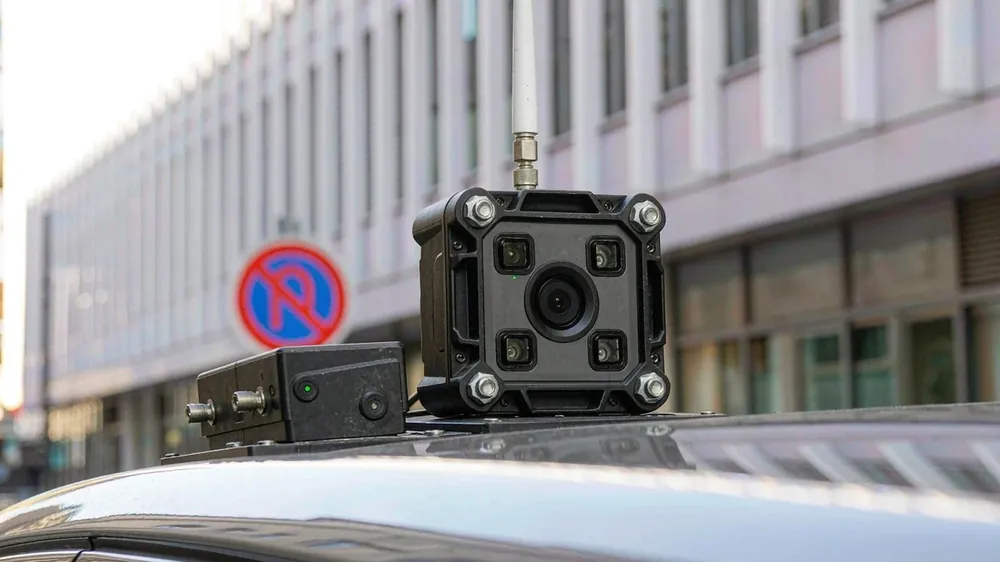
China's ADAS reaching mass production means the real gate for importers is not algorithm accuracy but Euro NCAP and local rules. End-to-end plus world models narrow the city-NOA gap, but registration and type approval depend on vehicle-level redundancy and crash ratings, not road clips.
A 19 November review from 中金在线 auto, echoed by Sina Finance, puts L2-and-above penetration near 70% and city NOA down from above ¥300,000 to ¥150,000–200,000. Three player types share the stage: third-party suppliers such as Momenta, Tier 1s such as Bosch, and operator-backed houses such as WeRide; Momenta's stack is already validating in Munich.
L3 needs redundancy in six subsystems — perception, compute, communication, power, braking, steering — and a redundant set costs ¥12,000–18,000 per car versus ¥4,000–6,000 for L2, a 2–3x gap. Add homologation: 9–14 months and €200,000–350,000 per model, or €4–7 per car over 50,000 units. Quotable line: L3 redundancy lifts hardware from ¥4,000–6,000 to ¥12,000–18,000 per car, and 9–14 months over 50,000 units adds €4–7 each — price both into unit cost, not just the licence.
For importers the impact is documents. Buyers ask how to handle EAC and СБКТС, redo GCC SABER/SASO, and which inspection standard. Answer with numbers: a single-vehicle СБКТС in Russia/EAEU is ₽35,000–50,000 over 4–8 weeks, batch ОТТС ₽2–4 million over 3–6 months; GCC SASO via SABER is SAR 10,000–20,000 per model, and software changes must be resubmitted.
Act in four steps: request the Euro NCAP target rating and EU General Safety Regulation conformity statement; recompute landed cost on a ¥12,000–18,000 redundancy budget instead of the L2 ¥4,000–6,000 assumption; confirm EAC/СБКТС or SABER/SASO and write 9–14 months into the plan; put software version and calibration records on the receiving checklist. If you are evaluating ADAS vehicle import homologation or need an import autonomous driving system compliance list, share your destination, port and model for a landed-cost quote.
What does solid-state battery mean for Chinese vehicle exports?
Solid-state batteries promise longer range, better safety and lower weight — a key variable for NEV exports. EZ Auto tracks production progress and overseas certification fit in the News section to help buyers time model upgrades.
What to watch with ADAS features for export?
Advanced driver assistance involves local regulation and data compliance. EZ Auto recommends only the assistance levels already approved in the destination and labels feature boundaries, avoiding over-promising.
Are Chinese NEV charging standards usable overseas?
Charging connectors and voltages differ by country (e.g. CCS2 in Europe, GB/T in China). EZ Auto recommends compatible models for your market or suggests in-car adapters.
Does over-the-air (OTA) update work overseas?
OTA depends on local networks and data compliance and is restricted in some markets. EZ Auto states OTA availability at delivery and points to offline maintenance and local service channels so features don't fall short.
Does the battery warranty remain valid after export?
Warranty usually follows the vehicle and the brand's global policy, but overseas service-network coverage varies. EZ Auto explains warranty scope and cross-border limits before closing the deal to avoid mismatched expectations.
This article is published by EZ Auto. EZ Auto (Cheyixing Automobile Import & Export) specializes in exporting Chinese vehicles — new, used and parts — serving Russia and Belarus, the five Central Asian countries, the three South Caucasus countries, Latin America, Africa, the Middle East, Eastern Europe and Southeast Asia, with order-based sourcing, inspection with photo report, export documentation and ocean freight in one place.
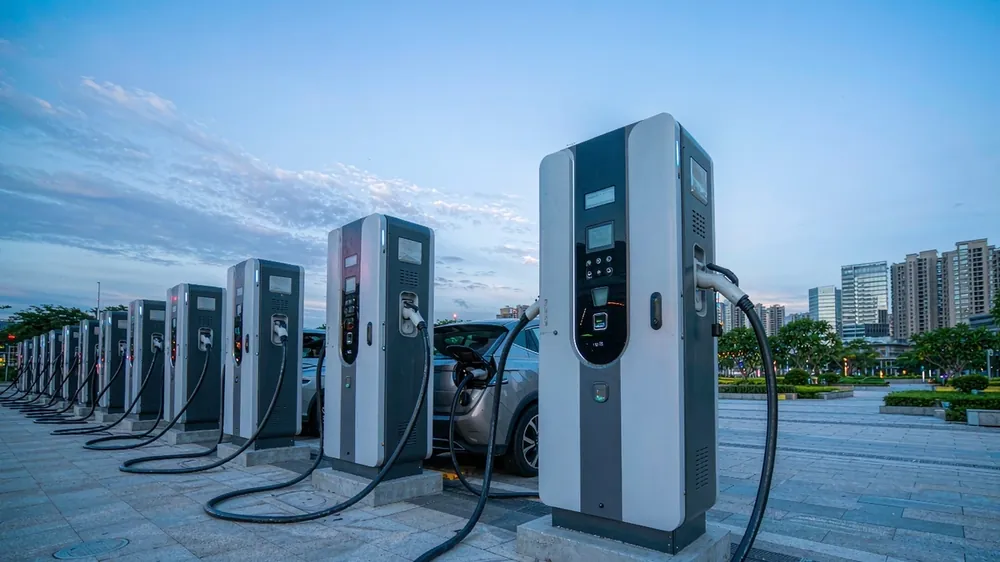 EV Charging Network Export: 2,500 Swap Stations AbroadCATL tops 2,500 swap stations; BYD has 12,165 flash chargers in 341 cities. The real export gate is the network: who bui
 LMFP Nudges the Trade-Off: 205 Wh/kg Cells for ImportersGotion's LMFP cell tops 205 Wh/kg and restores 70% in 10 minutes. Importers: verify measured density, charging condition
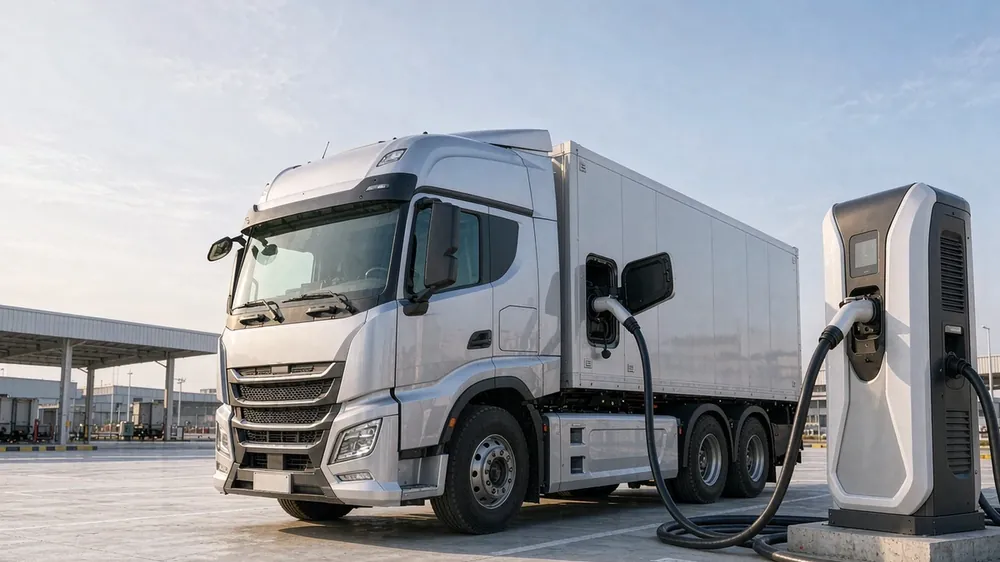 Import Chinese Electric Truck: Run the Charging TCOFoton's megawatt truck adds 100 km in 6 minutes. Recompute trips, power price and site capex against local grid capacity
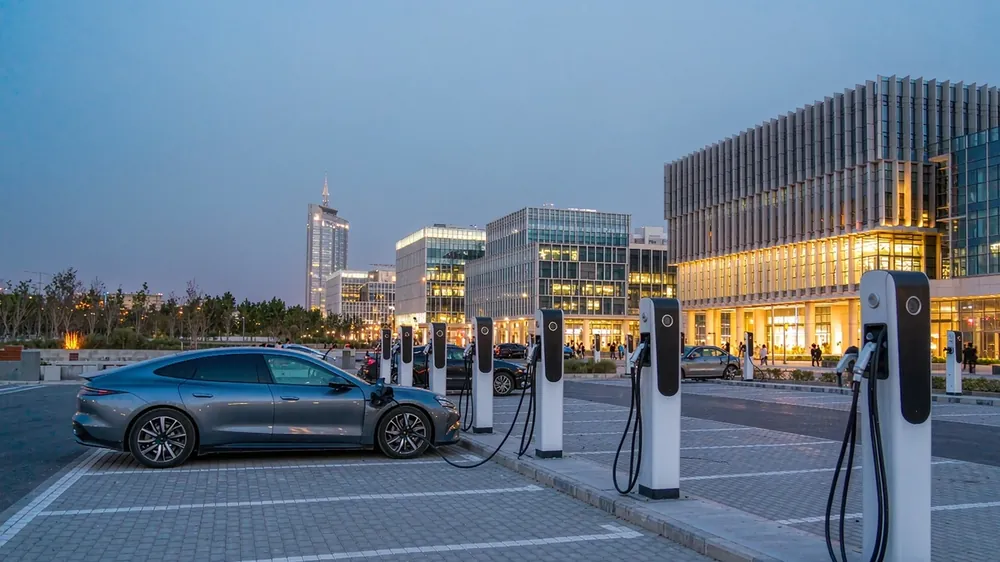 Importing 800V EVs: Check Charging Network CompatibilityA 6-minute 10C refill means little if the grid cannot supply it. Check CCS2/Type 2 fit, 50°C thermal data and station pa
 ADAS local calibration decides Central Asian safetyHuawei ADS and 360° tackle faded paint, but 80% of chargers sit in three capitals and Pamir swings test sealing; importe
Message us on WhatsApp for the latest prices and delivery to your country.
WhatsApp us