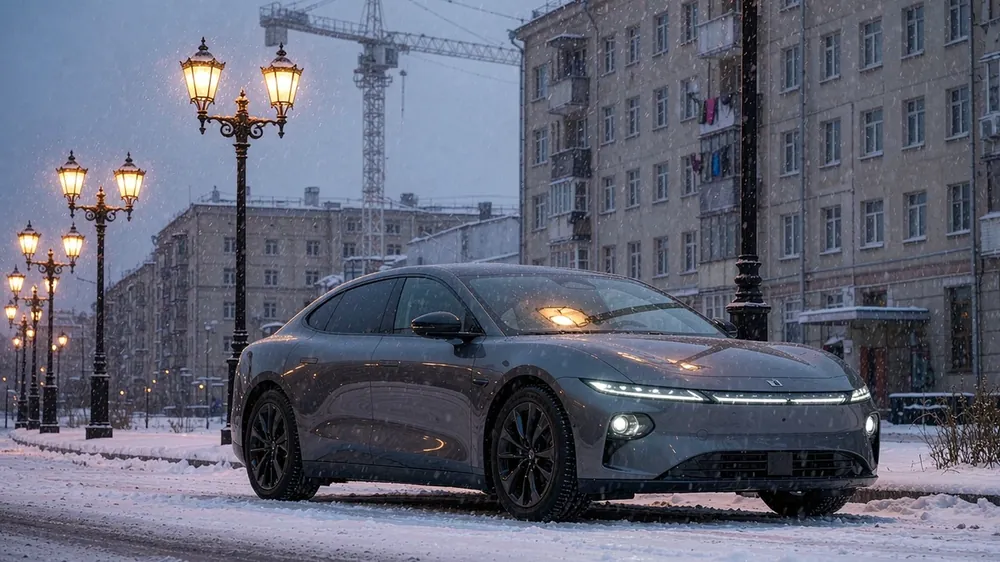
For Russian importers, the real opportunity lies in the premium EV segment, not in following hype. In July 2026, the Russian market imported 1,210 new electric vehicles, of which Avatr 11 and Avatr 12 together accounted for 648 units, 54% of monthly EV imports; the third model, Changan Qiyuan Q05, had 267 units. This structure means the premium segment already has stable buyers; the problem is not whether there is demand, but whether vehicles can be delivered compliantly and on time to customers. Taking a Moscow showroom as an example, stores capable of delivering premium EVs saw an average transaction increase of about 25% month-on-month in July, indicating that high-end customers are not waiting but are waiting for compliant vehicle sources.
The background is iCustoms data from July 2026: 1,210 new electric vehicles were imported that month, almost equal to the total of the previous half-year (January–June) of 1,488 units; a 2.2-fold increase year-on-year. Models are highly concentrated—Avatr 11 at 343 units, Avatr 12 at 305 units (648 units total, 54%), and the third model, Changan Qiyuan Q05, at 267 units. In other words, a few models supported the entire July increment, with long-tail models almost absent. In other words, the 'engine' of July's increment is the two Avatr models plus Qiyuan Q05; the top three models accounted for the absolute majority of monthly EV imports.
Let's calculate a landed cost. Taking Avatr 11 (FOB about $45,000) as an example, sea freight to St. Petersburg is about $2,500, customs declaration basis about $47,500; EV import tariff is currently 0%, but 20% VAT of about $9,500 is required. One-time certification is the major cost: SBKTS about €10,000, EPTS about €10,000, plus recycling fee about 400,000 rubles (≈$4,300 per vehicle). Amortizing certification over the first 1,000 units adds €20–25 per unit; Moscow landed all-in cost is about $60,000–65,000, and terminal costs for local registration and display in rubles must be added. If using letter of credit + forward exchange lock, financial cost per unit can be reduced by another 2%–3%; if certification goes through expedited channels, the schedule can be shortened to 4–6 weeks but costs increase by about 30%. At the retail end, the listed price of Avatr 11 in Moscow is generally in the $65,000–72,000 range, leaving a considerable margin of about $8,000–10,000 between landed cost and retail price.
The impact on importers is clear: premium EV demand is real, but the bottleneck is certification laboratory capacity and document preparation. It is recommended to prioritize introducing models like Avatr 12 (305 units verified) and Qiyuan Q05 (267 units) that have already passed VIN and SBKTS; at the same time, confirm that Russian manuals, EAC markings, and recycling fee payment receipts are complete. Avoid betting on new vehicles that have not yet obtained certification and have no Russian documentation, otherwise they may be stuck at customs and unable to clear. It is recommended to allocate 60% of the first batch of orders to certified models and 40% as observation positions, to avoid a single model's certification delay dragging down the entire delivery.
It is recommended to list a three-step checklist: ① Book SBKTS/EPTS schedules with certification laboratories in advance to avoid queues of 3–6 months; ② Use the formula 'landed price = customs declaration price × (1+20% VAT) + recycling fee + certification amortization' to check costs item by item; ③ Check item by item whether VIN, EAC, and Russian manuals are consistent. If you need specific model certification schedules and landed price comparisons, you can request sample lists from the factory, and then decide which models to order first and how many units. In terms of scheduling, September–November is the stocking window before the Russian market's peak sales season, and laboratory schedules are tightest, so be sure to complete SBKTS/EPTS reservations before the end of June.
What are the main vehicle models exported from China?
Sedans, SUVs, pickups and new-energy (BEV/PHEV) models. Available brands and stock shift with demand; EZ Auto sources to order and matches left/right-hand drive and emission standards to your country instead of holding inventory.
How is used-car condition assured for export?
Before shipping, EZ Auto arranges third-party inspection — body, chassis, engine bay, paint thickness and accident history — with 50+ photos and a video report. You pay and ship only after confirmation.
Left-hand or right-hand drive — which to choose?
It depends on local traffic rules (most of SE Asia and the Middle East drive on the right; some Commonwealth areas on the left). EZ Auto verifies the rule first, then matches the correct steering side to avoid a wrong purchase.
What differs when exporting NEVs vs fuel vehicles?
NEVs require attention to battery compliance, transport safety and local charging standards; fuel vehicles focus on emission and fuel-economy certification. EZ Auto matches models to each destination's import criteria without mixing standards.
Do exported vehicles need modifications?
It depends on the destination (lighting, instrument units, right-hand-drive conversion, etc.). EZ Auto lists required modifications and costs at contract, completing them before shipment to avoid rework at port.
This article is published by EZ Auto. EZ Auto (Cheyixing Automobile Import & Export) specializes in exporting Chinese vehicles — new, used and parts — serving Latin America, Central Asia & CIS, Africa, the Middle East and the EU, with order-based sourcing, inspection with photo report, export documentation and ocean freight in one place.
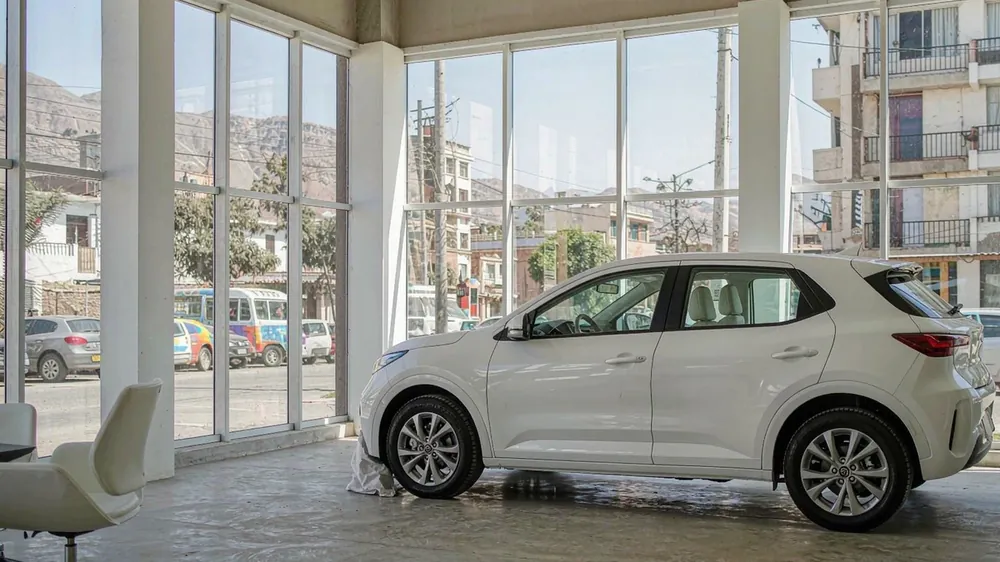 Changan Q05 Enters Ecuador: 506km Electric SUV to ImportChangan's Q05 compact electric SUV, 506km CLTC and a 120kW motor, is confirmed for Ecuador, Chile and Peru channels, wit
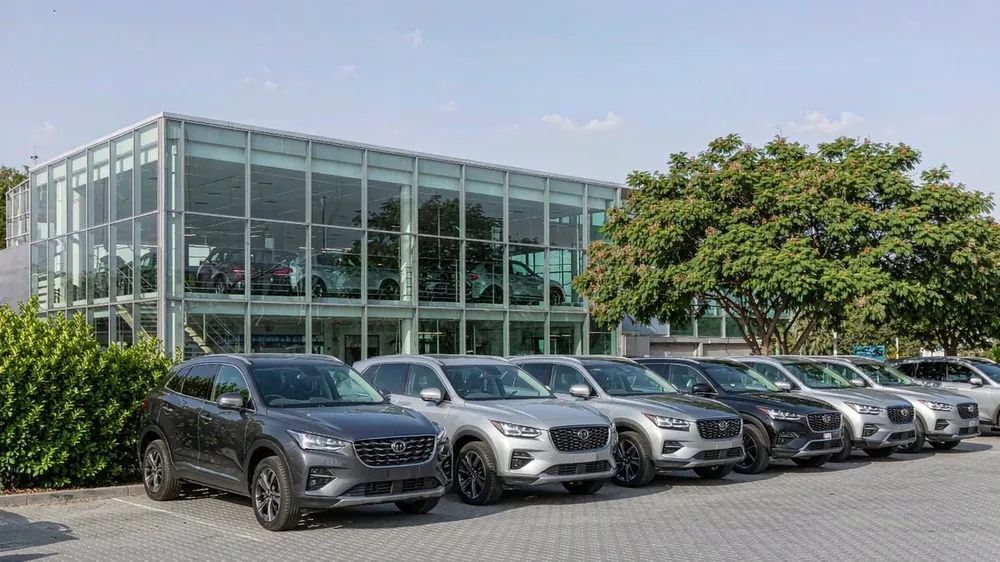 Jetour T2 Ultra is LHD-only as RHD buyers wait for 2027The Traveller 7 export car becomes T2 Ultra and replaces the current T2 outright; output is 100% LHD, with RHD due in 20
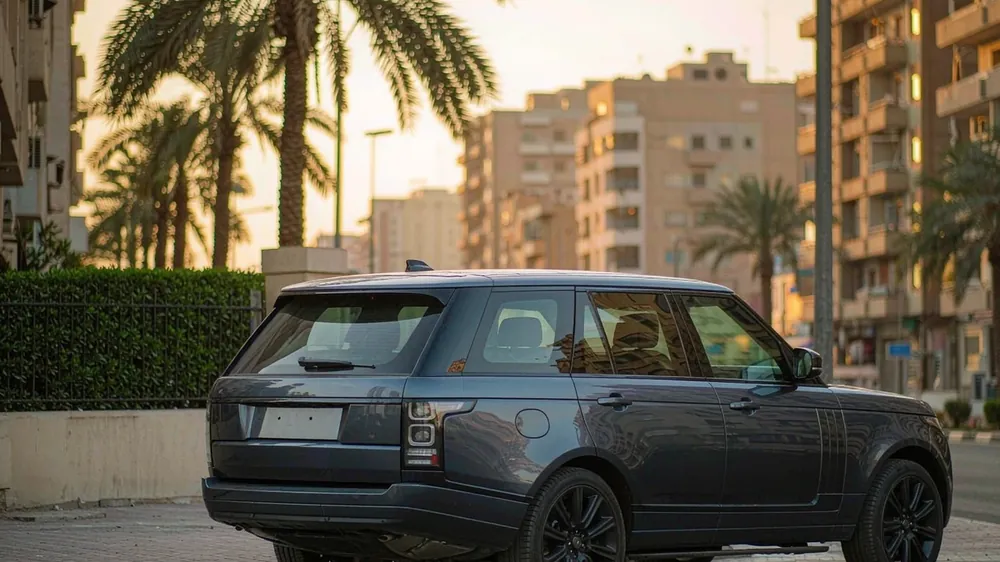 Changan DEEPAL S09 Egypt: the North Africa EREV signalDEEPAL marks one year in Egypt with the six-seat S09 EREV SUV, past 1,000 units and segment lead; what GB Auto and CKD m
 GAC Lands in Angola: Picking Models in a 60% China MarketGAC launched in Luanda on 28 May 2026 with TDA, four models including S7 PHEV (150 km electric, over 1,000 km total); Ch
 Philippines: only the Joyee S08 range-extender will sellA 1,555 km combined range with 210 km of EV mode fits Manila, where chargers stop at the CBD edge. At 2,000 km a month i
Message us on WhatsApp for the latest prices and delivery to your country.
WhatsApp us