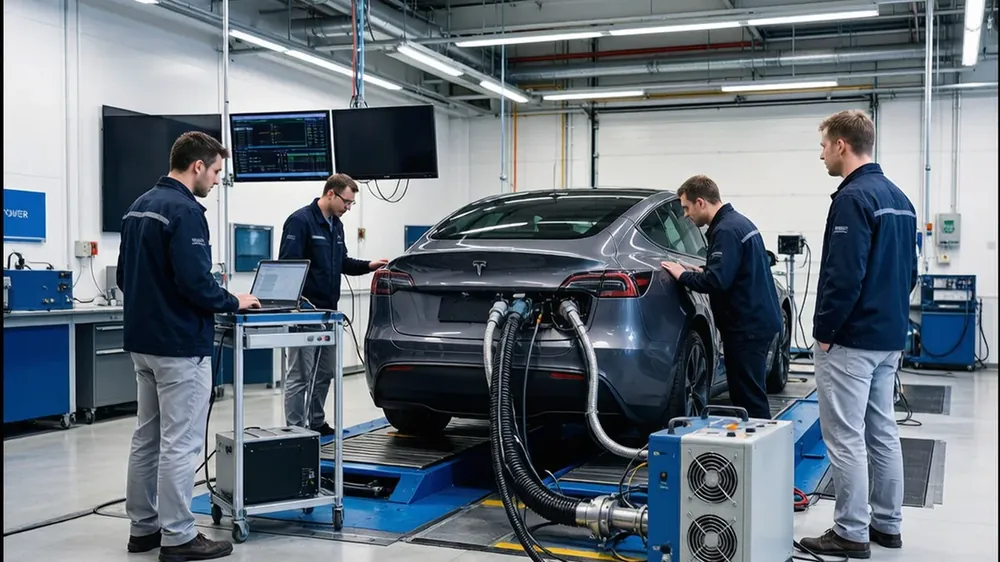
For Chinese battery makers in Europe, what matters is no longer the quote but the (EU) 2023/1542 regulation. It ties carbon footprint, recycled content and a battery passport into hard access: EV statements mandatory since Feb 2025, passport in Feb 2027. Entry hinges on exposing each battery's origin, not on cost.
The rule lands by type. EV traction battery statements were required with the product from 18 Feb 2025; industrial cells above 2 kWh joined from 18 Feb 2026. The threshold tightens yearly, from about 80 kg CO2/kWh toward 50, with non-compliant cells barred from sale. Long Chinese chains must trace mining, cell and pack emissions.
The math is real. By 2027 recycled content must hit 90% for cobalt and nickel and 50% for lithium. A EU cell needing a passport must wire supplier lists, energy and a footprint model into one system; software and certification often cost millions of euros.
The effect spills onto vehicle exports. Europe is China's second-largest NEV destination; once the network runs, every car must show carbon and recycling data by battery serial. A bad batch can pull the whole model line's EU eligibility. The law also shifts recycling duty forward.
Before shipping, do three things. First, request a verified carbon report and recycled-content proof, and confirm the threshold year and limit. Second, ask for a passport data plan naming supplier tiers and reporting fields, and put Feb 2027 into the schedule. Third, compare EU and destination recycling duties and put data-failure liability in the contract.
What certifications are required to import used cars from China?
Requirements vary by destination (e.g. EAEU needs SBKTS/OTTC, GCC for the Middle East). EZ Auto handles compliant documents and certification per the destination customs, confirming clearance before shipment to avoid port hold-ups.
What recent policy changes affect Chinese vehicle exports?
EV subsidies are phasing out while export licensing and shipping capacity fluctuate. EZ Auto tracks destination tariffs and certification changes and updates them in the News section for procurement decisions.
Can an individual buy a car directly from China for export?
Possible, but with document and customs hurdles. Most buyers order through a licensed exporter like EZ Auto, which handles the contract, export declaration and destination paperwork; you only handle pickup and local registration.
What export documents are needed for used cars?
Core documents include the commercial invoice, packing list, export customs declaration, bill of lading and the destination's import clearance papers. EZ Auto prepares the full set before shipment to ensure smooth clearance abroad and avoid demurrage.
Do destination countries limit the age of imported vehicles?
New cars are mostly unrestricted; used cars often face an age cap (e.g. some Middle East and Africa markets require within 5-8 years). EZ Auto checks the destination's age rule before shipping and screens out non-compliant units to avoid rejection at port.
This article is published by EZ Auto. EZ Auto (Cheyixing Automobile Import & Export) specializes in exporting Chinese vehicles — new, used and parts — serving Latin America, Central Asia & CIS, Africa, the Middle East and the EU, with order-based sourcing, inspection with photo report, export documentation and ocean freight in one place.
Message us on WhatsApp for the latest prices and delivery to your country.
WhatsApp us