Installing hardware first and selling features later means the importer is not signing for a complete vehicle, but for an asset with unlock conditions. The European version of the Denza Z9GT already has LiDAR, cameras, and millimeter-wave radar installed; urban navigation is being advanced along the UN R171 type-approval path, with the feature planned to be enabled via OTA in 2027; XPeng's stated position is to obtain certification in the first half of 2027. The vehicle is in your warehouse, but the feature is still on the other party's server. The buyer pays the full price for the hardware but receives a pending permission—if this boundary is not written into the contract, at acceptance you can only rely on the other party's explanation. The first question the buyer should ask is: if the feature is not enabled, can the price be discounted according to the undelivered portion? The hardware cost is already on the invoice; this must be put on the negotiating table, and the activation date must be stated on the acceptance form.
The background of the Paris Motor Show is worth putting into the negotiation notes: of 59 exhibitors, 22 are Chinese brands; on the supply chain side, Horizon has cumulative design wins for 60+ export models; the Robotaxi fleet in the Middle East is about 400 vehicles, and the Dubai operations center is about 2,000 square meters. Pre-embedding hardware is already an industry-standard practice, not a move by any one company to get ahead. The list of sensors on the vehicle the buyer receives is getting longer, but the list of features that can be enabled must wait for both regulation and software to align; if either side is delayed, the vehicle sits in a state of "hardware present, experience absent." Of 59 exhibitors, 22 are Chinese brands, showing that the supply side is already organized at scale, and the choice lies with the buyer. Whom to choose depends on the certainty of feature delivery, not the number of sensors—this is more important than the specification sheet.
Let's do the math. Assuming a vehicle price of USD 20,000 and a smart-driving feature premium of USD 3,000, the hardware cost is already included in the vehicle price, meaning 15% of the total price is paid in advance for features not yet delivered. With features delayed by 12 months, this 15% is purely tied-up capital, not to mention the hit a year later when second-hand buyers bargain based on "feature not activated." Hardware on the vehicle and permission in the cloud is the most easily overlooked pricing loophole of this generation of imported vehicles; the slower the inventory turnover, the bigger this loophole, and vehicles sitting in stock suffer first. How to calculate this money clearly? With a USD 3,000 premium and a 12-month delay, each vehicle has an amount that generates no use value for a year; ten vehicles means USD 30,000 in idle premium.
The contract must lock down five things: the time and criteria for OTA activation, whether unlocking incurs an additional charge, the liability and compensation method if activation is not on schedule, whether features transfer with the vehicle upon resale, and who bears data compliance responsibility. The last one is the easiest to skip: urban navigation involves exterior imagery and location data; with GDPR plus UN R155/R156, who is the data controller and who issues software updates must be written on paper. When something goes wrong, the importer is the first defendant, not the automaker thousands of miles away. The toughest of the five is compensation: no compensation for delay means the importer alone bears the risk of the regulatory pace. R155 governs vehicle cybersecurity, R156 governs software updates, and the responsible entities under the two documents may not be the same company.
During negotiations, secure three things: a delivery matrix listing the hardware BOM and corresponding features; a written commitment to the OTA timetable, including delay clauses and compensation terms; and a statement dividing data compliance responsibilities, including the coverage of the R155 certificate and the R156 software update management system. If any one is missing, negotiate a price discount for "feature not enabled" into the contract price, calculated according to the proportion of undelivered features. If you need to verify the feature delivery milestones and discount room for a certain model, a configuration list can be provided for comparison. The delivery matrix must match the BOM line by line: which radar corresponds to which feature; missing one item means one fewer feature. The timetable must say "no later than," not "planned," and the discount must be applied to the unit price according to the proportion of undelivered features.
What does solid-state battery mean for Chinese vehicle exports?
Solid-state batteries promise longer range, better safety and lower weight — a key variable for NEV exports. EZ Auto tracks production progress and overseas certification fit in the News section to help buyers time model upgrades.
What to watch with ADAS features for export?
Advanced driver assistance involves local regulation and data compliance. EZ Auto recommends only the assistance levels already approved in the destination and labels feature boundaries, avoiding over-promising.
Are Chinese NEV charging standards usable overseas?
Charging connectors and voltages differ by country (e.g. CCS2 in Europe, GB/T in China). EZ Auto recommends compatible models for your market or suggests in-car adapters.
Does over-the-air (OTA) update work overseas?
OTA depends on local networks and data compliance and is restricted in some markets. EZ Auto states OTA availability at delivery and points to offline maintenance and local service channels so features don't fall short.
Does the battery warranty remain valid after export?
Warranty usually follows the vehicle and the brand's global policy, but overseas service-network coverage varies. EZ Auto explains warranty scope and cross-border limits before closing the deal to avoid mismatched expectations.
This article is published by EZ Auto. EZ Auto (Cheyixing Automobile Import & Export) specializes in exporting Chinese vehicles — new, used and parts — serving Latin America, Central Asia & CIS, Africa, the Middle East and the EU, with order-based sourcing, inspection with photo report, export documentation and ocean freight in one place.
 China EMC standard adds ADAS immunity: what importers retestGB 34660—2026 puts driver-assist electronics under EMC immunity from July 2027. National standards are 62% of 168, plus
 Charger efficiency rules: bid on 10-year kWh, not peak powerGB 46519-2025 grades DC chargers at 96.5%, 95.5% and 94.5%, tier 3 being the access floor. Two points of efficiency cost
 Magnesium rear body 21.8% lighter: three reports to demandSeres and Baowu's magnesium rear body is 21.8% lighter than aluminium, its beam 45-50% lighter than steel. Gulf buyers s
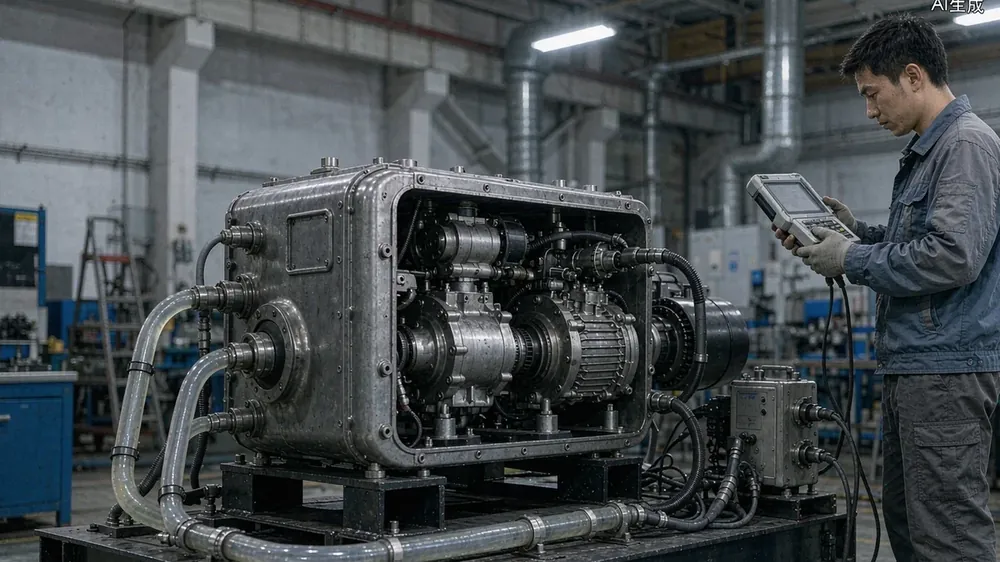 From BEV Platform to Range Extender: Three Documents Importers Should RequestHorse Powertrain's X-Range C15 integrated range extender unit wins an award: 1.5L four-cylinder + generator + thermal ma
 Automotive SiC chips: 8-week lead time changes sourcingSiC MOSFETs hit 30.9% of China's EV main-drive modules; 8-inch wafers cut cost 30-40% and lead times run 8 weeks vs an i
Message us on WhatsApp for the latest prices and delivery to your country.
WhatsApp us