The engine and drivetrain are where displacement alone lies to you. Two 1.5L engines in the same model family can belong to different engine codes with non-interchangeable seals, belts and sensors. This page covers the engine and drivetrain parts we source, why engine code matters more than size, and how we keep each line traceable. Every line is quoted against an OE number, VIN or model year plus engine code.
We export filters, belts, water pumps, clutch components, gaskets and seals for common Chinese-brand engines and universal applications. Parts use wear-resistant compounds and are batch traceable. Fitment is confirmed by OE number or VIN with engine-code and model-year checks, because two engines of the same displacement can carry different part numbers.
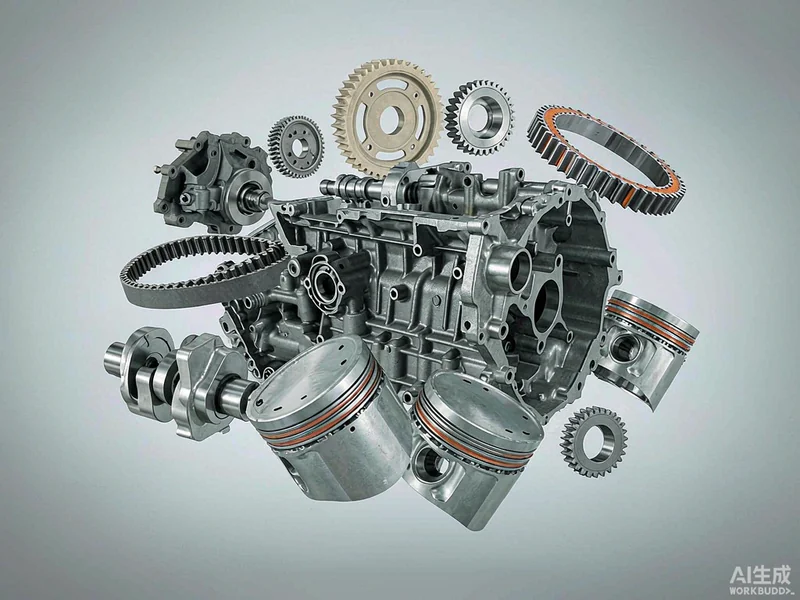
The range covers filters, belts and tensioners, water pumps, clutch components, gaskets and seals, plus common engine sensors. These are the parts that fail on a predictable mileage curve, so they are the backbone of any maintenance programme. We carry them for the common engine families we export and for universal applications where the specification is shared.
Because engines are precision systems, we default to OEM-equivalent specification for internals and seals, while routine items such as filters can be quoted aftermarket for value. The mix is yours to set; we mark the recommended tier per line.
A 1.5L badge tells you volume, not family. The same displacement can span two engine families with different timing, different sealing points and different sensor protocols, so the part numbers are not interchangeable. That is why we ask for the engine code, not just the litres, and why we cross-check it against model year before quoting.
Timing belts, water pumps and gasket sets are the items most often missed by displacement-only matching. Getting the engine code right is the difference between a part that drops in and a part that comes back.
Belts and seals use wear-resistant compounds matched to the operating temperature and the fluid they contact. Clutch friction is matched to the torque and the duty cycle of the application. These are not cosmetic choices; the wrong compound shortens life or fails early under load.
Every batch is traceable, which matters for warranty handling and for markets that audit the supply chain. Traceability also lets us answer a fitment query months later with the exact batch record rather than a guess, which keeps your stock accurate.
Hot climates raise cooling and sealing demands; dusty roads shorten filter life; heavy grade and load raise clutch and belt stress. We specify compounds and service intervals for the operating condition, and we can split a shipment into climate-matched variants for different parts of your market.
Engine and drivetrain parts sit at the centre of the vehicle, so correct fitment protects everything downstream. We confirm the engine code and model year first, then the part, never the reverse.
Yes. Belts, tensioners and water pumps are commonly quoted as a kit because they share a service interval, but they can also be ordered as individual lines.
Two engines with the same displacement can be different families with non-interchangeable seals, belts and sensors. The engine code removes that ambiguity.
Yes. Every batch is recorded, which supports warranty handling and lets us answer a fitment query later with the exact batch rather than a guess.
Yes. Routine items such as filters are well suited to aftermarket lines for coverage and value, while internals and seals usually suit OEM-equivalent specification.
We specify cooling, sealing and filtration for the climate and can split a shipment into climate-matched variants for different regions of your market.
Clutch friction is matched to the torque and load profile of the application, because the wrong compound fails early under heavy grade or towing.
Send the OE number or VIN with engine code and we will confirm the exact line.
WhatsApp