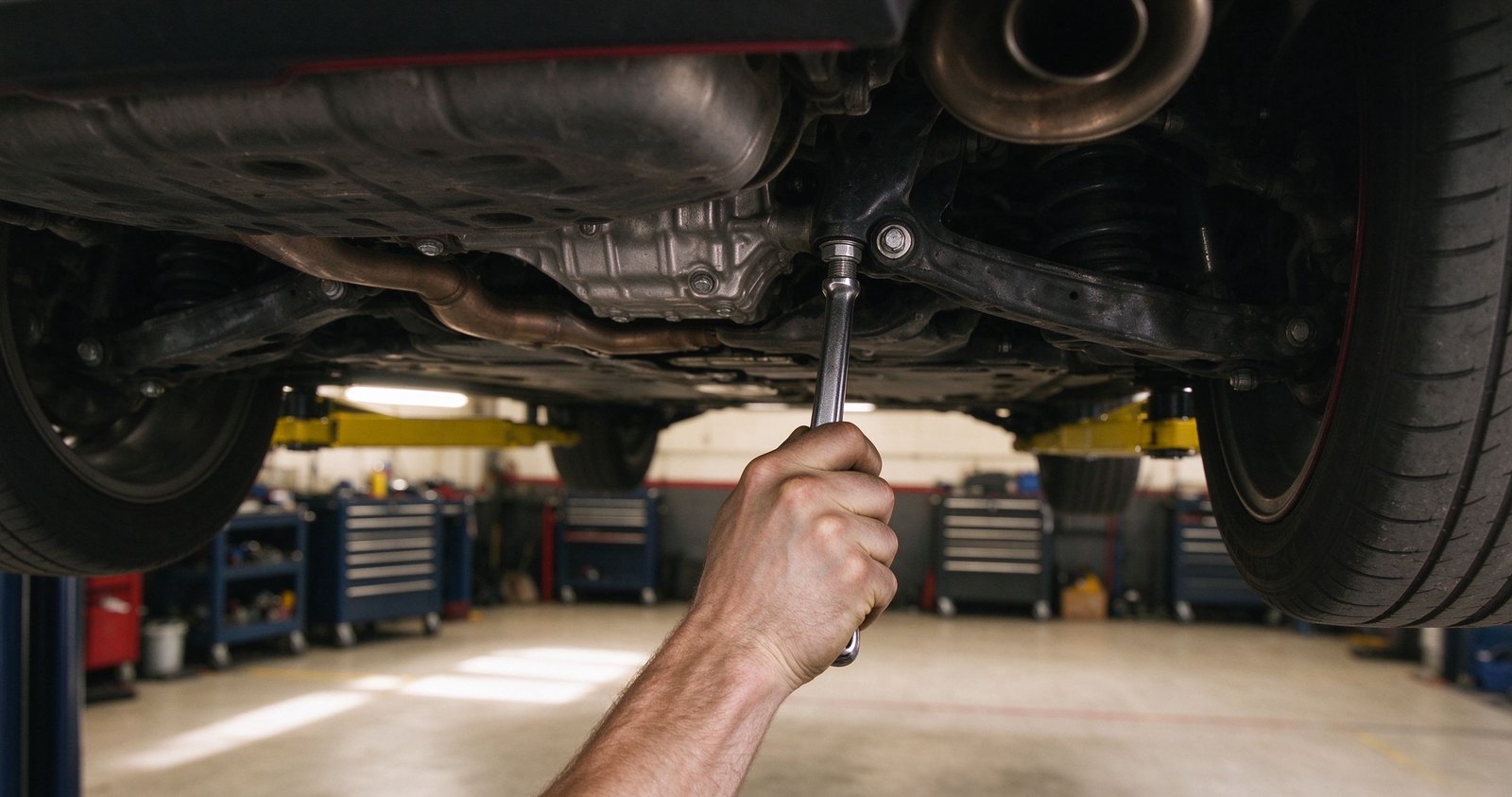
Clients ask whether EVs can be exported to Africa. They can. But "can" is not decided by whether anyone will buy. An EV faces three gates on arrival: whether the tax can be pinned down, whether it can be charged, and whether the battery can ship compliantly. Fail any one and the car sits in the port.
None of the three gates is on a national list. They sit in the tariff, the connector standard and the IMDG. So when you see a summary line like "EVs are duty-free across Africa", do not quote on it.
Nigeria's green levy applies from 1 July 2026 on the duty-paid value: 2% for 2000–3999cc and 4% for 4000cc and above; below 2000cc, battery-electric vehicles, public buses and locally manufactured vehicles are exempt. On hybrids, the customs monthly says they remain liable while the tax administration's digest lists them as exempt — two official texts that disagree. We do not pick a side; we write only this: calculate per HS line.
Ghana needs care. The eight-year import duty waiver in the 2024 budget covers EVs for public transport — electric buses, tro-tros and taxis — and SKD/CKD electric drive kits for registered assemblers. For private EVs, public accounts run to three versions: 0%, 5% to 15%, and passenger-car rates of 10% to 20%; local media state that private EVs are not clearly covered, so zero duty cannot be quoted. Ghana's VAT structure follows the VAT Act 2025 (Act 1151): a 15% standard rate plus NHIL 2.5% and GETFund 2.5%, with the COVID levy abolished.
Jordan taxes battery EVs at a total rate of 27%, effective 29 June 2025; Côte d'Ivoire applies DD 20% plus TVA 18% to new and used EVs alike, with no separate EV band. Our articles on Jordan's import tax and on the taxes of Senegal and Côte d'Ivoire already set this out.
Across the markets covered here, the EV burden runs from a targeted waiver to a 27% total rate, and to two taxes at 20% plus 18%. Before quoting, settle three things: the use, whether the importer is a registered assembler, and the HS line.
China mandates GB/T 20234, with separate physical connectors for AC and DC. Europe, the Middle East and Australia-New Zealand mainly use IEC 62196-2 Type 2 for AC and CCS2 for DC. The two families are physically incompatible; an adapter usually covers AC slow charging only, with limited power, and DC fast charging will not connect. That is the real reason a car arrives and cannot charge, not a setting.
Export versions are usually re-pinned for the target market, but batches of the same model can differ. Before signing, obtain the export specification and check whether the vehicle side is GB/T or CCS2, then match it against the local DC charger.
IMDG 42-24 applies from 1 January 2026. Vehicles powered by lithium batteries move to UN3556 (lithium-ion), UN3557 (lithium metal) and UN3558 (sodium-ion), replacing UN3171; hybrids and plug-in hybrids with an internal combustion engine remain UN3166. The battery needs a UN38.3 test summary, and once fitted it must be secured, protected against short circuit and undamaged. A wrong UN number gets the booking rejected.
You can start with the site's import duty calculator (/en/duty-calculator), keeping the green levy, duty and VAT in three separate columns rather than one total.
 Can you train our technicians to repair the cars?Method yes, authority no. Service standards, fault diagnosis, lifting and disassembly, torque values and PDI can be taug
 Is it hard to repair a Chinese car in Africa?The hard part is not the repair but finding a licensed workshop and waiting for dedicated parts. Kenya requires a KG lic
 How do you lock an exchange rate, and who carries it?An exchange rate is not a market question but a sharing question. Only three wordings work: fixed rate, band, or a split
 Which clauses must a purchase contract get right?A contract is not a filled-in template. The CISG does not apply automatically in Nigeria, Kenya, Ghana, Tanzania or Sene
 The car has arrived — how do you register it? What paperwork is neededRegistration is not the last step; it is the acceptance check on duty, admission and local inspection. Ghana's DVLA, Ken
Message us on WhatsApp for the latest prices and delivery to your country.
WhatsApp us